48 Hours in Lisbon: Fado, Pastéis, and the Ghosts of Alfama
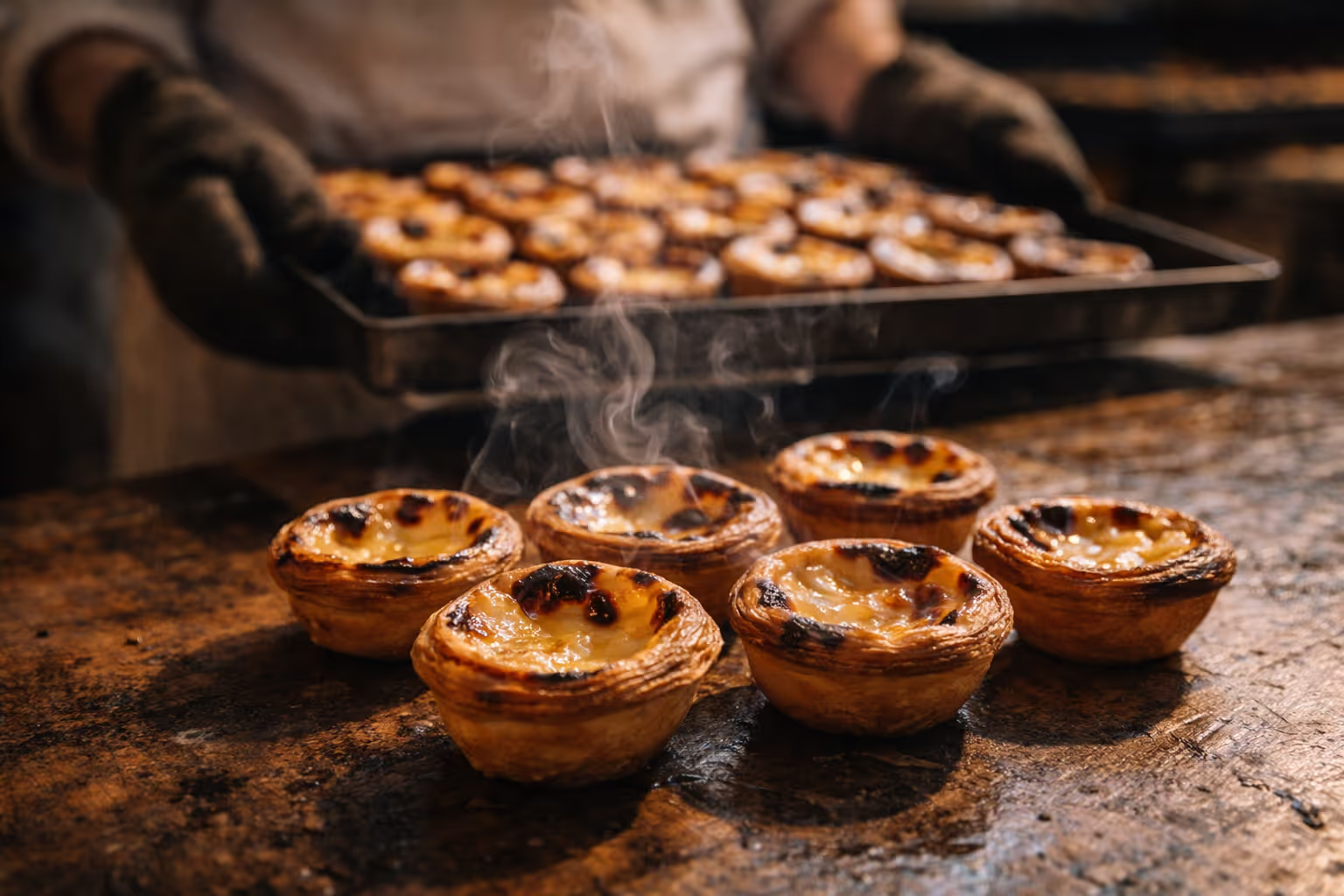
The fado singer closed her eyes and sang about something I couldn't translate, but somehow understood. Her voice cracked in the middle of a phrase, not from lack of skill but from feeling, and the small tavern in Alfama went absolutely silent. Twenty strangers held their breath together. Even the waiter, mid-pour, froze.
I'd been in Lisbon for less than 24 hours, and I was already crying into my vinho verde.
Friday Evening: Arriving to Golden Light
I arrived in Lisbon on a Friday evening as the city glowed in that particular golden light that photographers pray for. From the taxi window, I watched Lisbon stack itself up hills like a pastel layer cake: coral, butter yellow, faded blue, sea green, all crowned with terracotta roofs and punctuated by church spires.
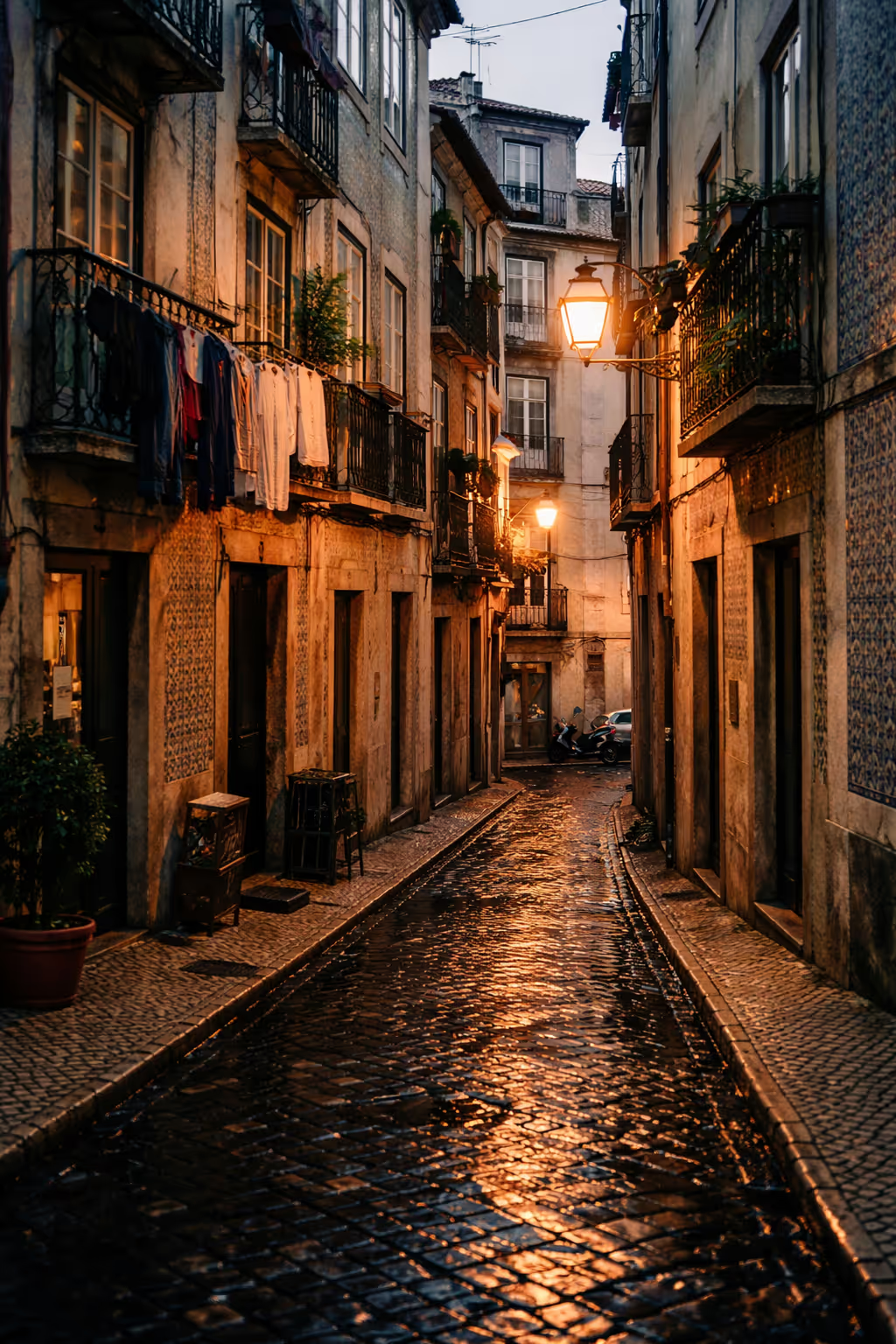
My Airbnb was in Graça, just up the hill from Alfama, in a building so old the floors slanted at alarming angles. The landlady, Senhora Rosa, was exactly what you'd hope for in a Portuguese grandmother: warm, opinionated, and insistent that I was too thin. Within ten minutes of arrival, she'd given me keys, told me three times to be careful on the tram, and presented me with still-warm pastéis de nata from the bakery downstairs.
"Tomorrow, you get lost in Alfama," she instructed in careful English. "GPS off. Just walk. Understand?"
I promised I would. She nodded approvingly, as if I'd passed some kind of test.
Saturday Morning: Lost on Purpose
I kept my promise to Senhora Rosa. Saturday morning, I descended into Alfama with my phone firmly in my pocket, no map, no plan. This is how you're supposed to explore Alfama, surrendering to its maze of narrow streets that were old when Vasco da Gama set sail, following your instincts and your ears.
Alfama operates on a different clock than the rest of Lisbon. Time moves slower in the city's oldest neighborhood. Laundry hangs from wrought-iron balconies like prayer flags. Elderly women in black lean from windows, watching the street like television. Neighbors shout conversations from third-floor windows to first-floor doorways. Tiles (those famous Portuguese azulejos) cover every available surface, telling stories in blue and white.
I walked aimlessly, wonderfully lost. Every turn revealed something: a hidden chapel, a miradouro with views across tangled roofs to the Tagus River, a tiny tavern with plastic chairs spilling onto the cobblestones. I heard fado drifting from an open window, not the performative tourist version, but someone practicing, voice raw and unpolished and all the more beautiful for it.
An elderly man stopped me on a narrow staircase. "Perdida?" Lost? It seemed to be a common question for me in Portugal.
"Propositalmente," I answered. On purpose. He laughed, a sound like dried leaves, and pointed to a specific alley. "The best pastéis de Belém are not in Belém," he confided in Portuguese. "Go there. Tell Teresa that Manuel sent you."
I had no idea if I understood correctly, but I followed his directions anyway.
The Pastéis Revelation
The pastelaria was barely wider than a closet, tucked between a fish shop and someone's front door. Teresa (I assumed she was Teresa) looked surprised when I mentioned Manuel's name, then burst into rapid Portuguese that I interpreted as either "That old troublemaker!" or "How wonderful!" Probably both.
She handed me a pastéis de nata fresh from the oven, still hot enough to burn my tongue. I didn't care. It was transcendent: the custard creamy and wobbly, the pastry shell shattering into a thousand buttery flakes, the top caramelized to bitter-sweet perfection.
I'd had pastéis de nata before, even the famous ones from the monastery in Belém. This was different. Maybe it was Teresa's technique. Maybe it was the discovery of it. Maybe it was the way she watched my face when I took the first bite, nodding in satisfaction when she saw my expression.
"Está bom?" Is it good?
"Está perfeito," I managed. It's perfect.
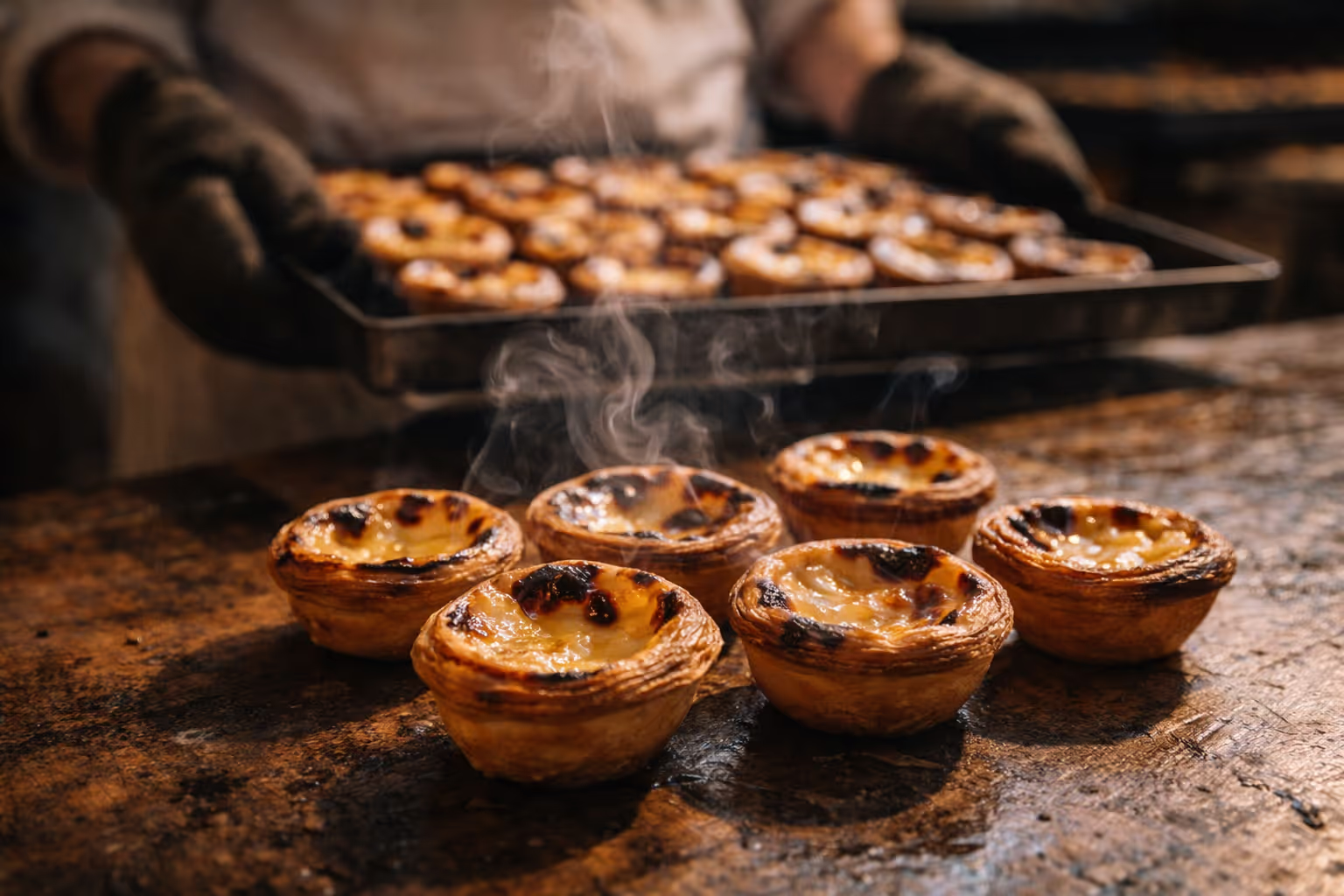
She refused to let me pay for the first one. The second one I paid for, plus three more wrapped carefully in paper for later. We communicated mostly through gestures and smiles, her telling me stories I couldn't quite understand but absorbed anyway, about the shop, her family, the neighborhood. Her hands moved expressively, painting pictures in the air.
When I left, she kissed both my cheeks. "Volta," she said. Come back. I promised I would, meaning it completely, knowing I probably never would. Travel is full of these small heartbreaks.
Saturday Night: The Language of Saudade
The fado house wasn't one of the big tourist ones in Bairro Alto. It was tiny, barely fifteen tables, hidden down an Alfama alley I'd never find again if I tried. A friend of a friend had texted me the name and address with strict instructions: arrive early, order food, tip the musicians.
Fado isn't just music. It's a feeling, a philosophy, a particularly Portuguese form of beautiful sadness. The word most associated with fado is saudade, which translates roughly as longing, nostalgia, melancholic yearning. But that doesn't quite capture it. Saudade is missing something you're not sure you ever had. It's happiness tinged with sadness because you know it won't last. It's the Portuguese soul set to music.
I understood this in theory. Then the first singer opened her mouth, and I understood it in my bones.
She sang about sailors who never returned, about lost love, about the sea that gives and takes away. The guitarist watched her face, following her emotional journey, his fingers finding the exact notes that would break your heart in the best way. Between songs, the tiny restaurant was silent except for the sound of forks on plates, wine being poured, the rain that had started to fall outside.

The second singer was an older man with a voice like weathered wood. He sang looking at no one and everyone, his eyes distant, living somewhere in the song's memory. When he finished, the silence lasted several seconds before anyone could bring themselves to applaud.
That's when I found myself crying, and I wasn't alone. The woman next to me dabbed her eyes. A man at the bar stared into his wine glass like it held answers. We were strangers sharing something intimate and inexplicable, the peculiar privilege of feeling someone else's sadness and somehow being comforted by it.
Sunday Morning: Ghosts and Trams
My last morning in Lisbon, I rode tram 28. Yes, it's touristy. Yes, it's crowded. I don't care. It's also magical. The vintage yellow tram screams around corners, climbs impossible hills, squeezes through streets so narrow you can touch the buildings on both sides. It's a carnival ride disguised as public transportation.
I got off at the Sé cathedral and walked back down to Alfama one last time. The neighborhood was quieter on Sunday morning, many shops closed, church bells calling the faithful to mass. I found elderly women in their Sunday best, walking slowly to church on the arms of younger relatives. I found a small square where pigeons outnumbered people. I found a viewpoint where I could see across the terracotta roofs to the river, ships moving in and out like they had for centuries.
Lisbon is haunted in the best way, by explorers and poets, by the earthquake of 1755 that destroyed two-thirds of the city, by fado singers long dead whose voices still echo in Alfama's alleys, by every person who ever stood at these viewpoints and felt the same saudade for something they couldn't quite name.
What Lisbon Taught Me in 48 Hours
You can't really know Lisbon in a weekend. I didn't even scratch the surface. I never made it to LX Factory or the Time Out Market. I skipped Sintra entirely. I spent almost all my time in Alfama and the surrounding neighborhoods, and even that felt rushed.
But 48 hours was enough to understand something essential about Lisbon: it's a city that makes you feel. Not think, not analyze. Just feel. The bittersweet beauty of fado, the sweetness of a perfect pastéis de nata, the melancholy of old tiles and older stories, the generosity of strangers who share their favorite spots and their memories.
I left Lisbon on Sunday afternoon with a bag full of azulejo tiles I'd probably never hang up, a phone full of photos that didn't quite capture it, and a feeling I couldn't shake. Saudade, I suppose. Missing a city I'd barely met, longing to return to streets I could no longer find, carrying the echo of a song I couldn't translate but would never forget.
Things to Do in Lisbon (A 48-Hour Guide)
Get lost in Alfama. Ride tram 28 early or late to avoid crowds. Find a real fado house in Alfama or Mouraria, not the tourist traps in Bairro Alto. Eat pastéis de nata while they're still warm. Take advice from elderly locals. Visit the miradouros for sunset. Walk everywhere. Learn the word saudade and let the city teach you what it means.
And turn off your GPS. The best parts of Lisbon happen when you're not trying to find them.
Lost and Found in Medellín: How a Wrong Turn Led to the Best Arepas of My Life
Shopping in Bangkok: How I Ended Up Spending Double My Travel Budget
Three Days in Porto: Cellars, Azulejo Tiles, and a Dinner Table