Lost and Found in Medellín: How a Wrong Turn Led to the Best Arepas of My Life
I was absolutely, completely, hopelessly lost. The kind of lost where your phone's GPS spins uselessly and every street looks identical. I'd been trying to find my way back to El Poblado for the better part of an hour, and instead, I'd wandered into a residential neighborhood where laundry hung from balconies and salsa music poured from open windows. My Spanish was terrible, my phone battery was at 3%, and I was starting to panic.
Then I smelled them. Arepas.
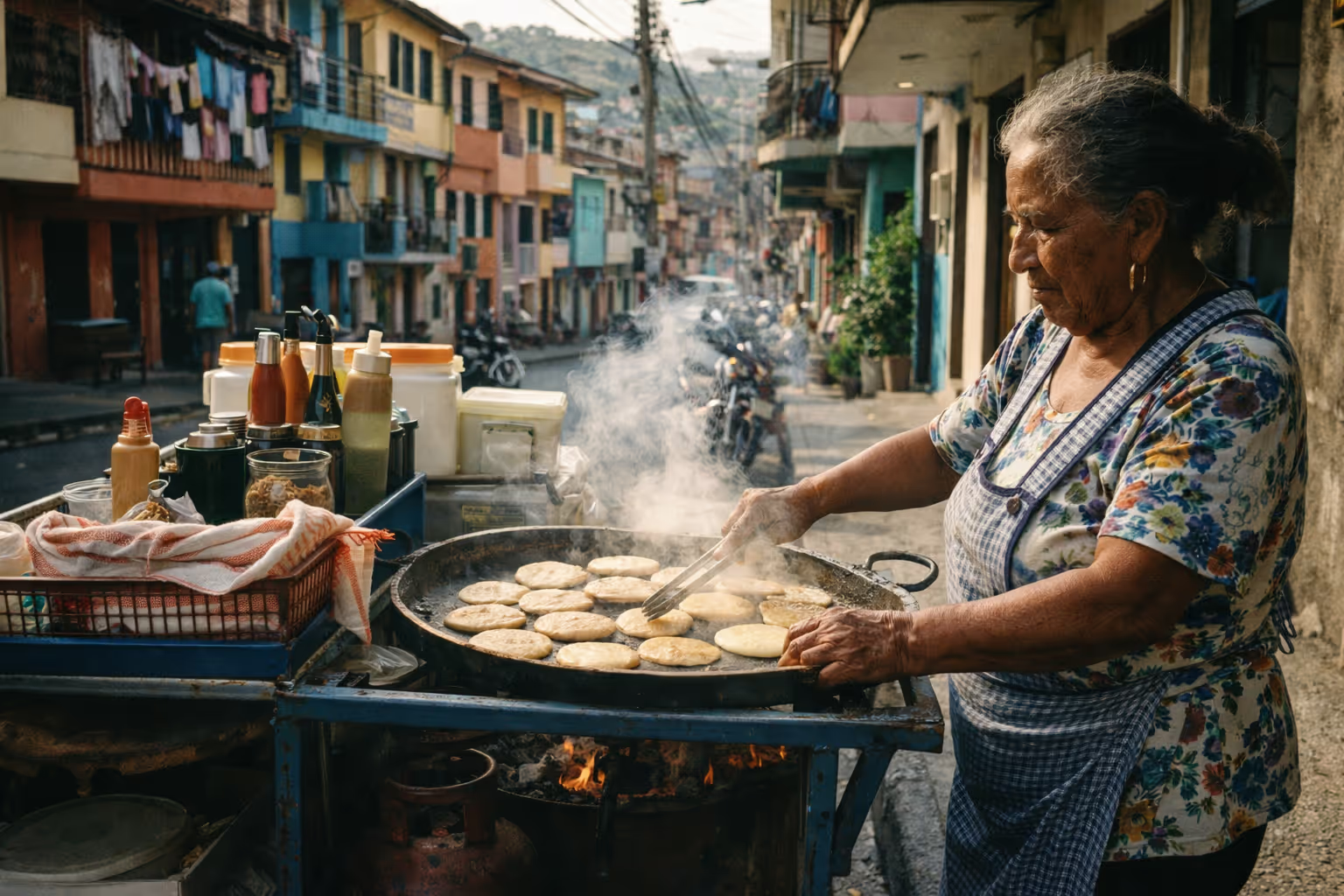
The scent of corn and melted cheese led me like a cartoon character following a pie's aroma, around a corner to a small street cart where an elderly woman was grilling arepas on a well-loved griddle. She looked up at me, sweaty, lost, obviously foreign, and smiled with the kind of warmth that transcends language barriers.
"¿Perdida?" she asked. Lost?
I nodded sheepishly. She laughed, not unkindly, and handed me an arepa. "Primero comes, después direcciones." First eat, then directions.
The City That Transformed Itself
That wrong turn and that arepa (crispy outside, pillowy inside, bursting with queso and a touch of butter) became the unexpected centerpiece of my week in Medellín. Not the carefully planned Instagram spots, not the guided tour of Comuna 13, but an accidental moment of generosity from a stranger who saw a person in need of food and help, in that order.
Medellín has spent decades trying to move past a single narrative. You know the one. The one that makes most people think of a violent past and a notorious kingpin whenever the city's name comes up. But if you actually visit Medellín, if you walk its streets, talk to its people, ride the metro, and pay attention, you'll discover a city engaged in one of the most remarkable urban transformations in Latin America.
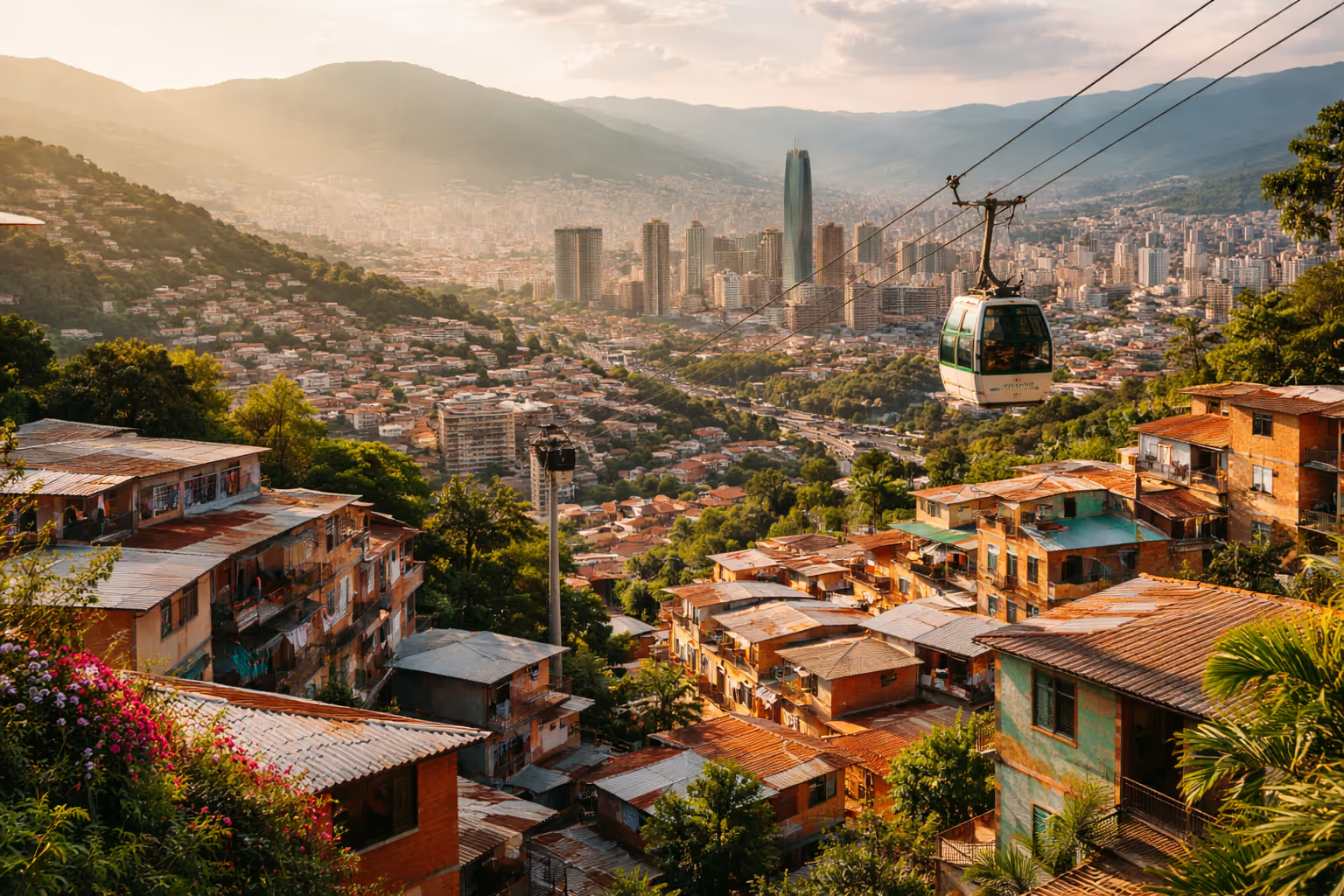
This is a city that turned its most violent neighborhood into a living gallery of street art. A city that installed cable cars to connect impoverished hillside communities to jobs and opportunities downtown. A city that chose libraries and parks over prisons and walls. Medellín isn't running from its past; it's actively writing a different future.
Comuna 13: Art From Ashes
The guided tour of Comuna 13 was on my list, but I almost skipped it. "Slum tourism," a fellow traveler had called it dismissively. I'm glad I ignored that advice.
Our guide, Javier, grew up in Comuna 13. He lived through the violence of the 1990s, the paramilitary control, the military operation in 2002 that left hundreds dead. He didn't sugarcoat history or perform trauma for tourists. Instead, he showed us how his community chose to heal.
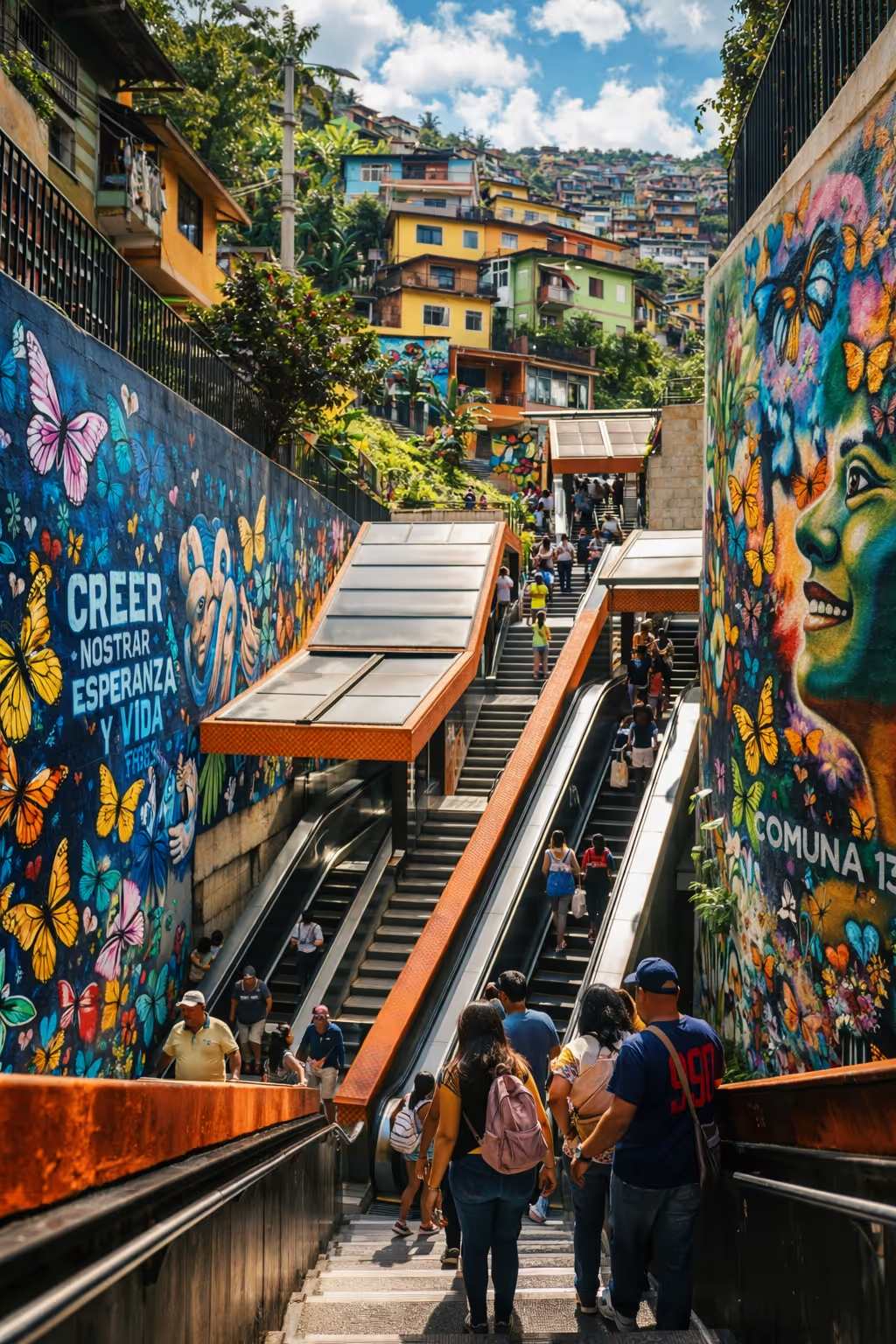
Every wall in Comuna 13 tells a story now. Vibrant murals cover buildings that once bore bullet holes. The escaleras eléctricas, outdoor escalators built in 2011, transformed a neighborhood where people once struggled up hundreds of steep steps just to get home. Hip-hop and breakdancing replaced gunfire. Art workshops replaced fear.
"This isn't about forgetting," Javier explained as we stood in front of a mural depicting butterflies emerging from darkness. "It's about remembering differently. Choosing what we become next."
We met artists, vendors, musicians. Everyone had stories: of loss, of survival, of hope. A woman selling fresh juice told me about losing her son to violence in the '90s, then proudly showed me photos of her grandson's university graduation. A teenager demonstrated breakdancing moves, his crew practicing their routine for an upcoming competition. These weren't props in a poverty tour; they were people generously sharing their neighborhood's transformation with strangers.
The tour ended with Javier pointing to the view of downtown Medellín spread below us. "That's why they wanted to keep us up here," he said quietly. "We had the best view. Now we can finally enjoy it."
The Renaissance City
Back in El Poblado, I found a different Medellín. Parque Lleras buzzed with energy: trendy restaurants, rooftop bars, digital nomads hunched over MacBooks in coffee shops. The neighborhood had the cosmopolitan vibe of any gentrifying urban area: craft cocktails, artisanal everything, English on half the menus.
I have mixed feelings about El Poblado. It's convenient and comfortable, yes. The hostels are social, the wifi is reliable, and you can find green juice and avocado toast if that's your thing. But it also feels insulated from the real city, a bubble where foreign travelers can experience Medellín without actually experiencing Medellín.
The real magic happened in the in-between spaces, in neighborhoods like Laureles and Envigado where locals actually live. I spent an afternoon in Parque de El Poblado (the actual park, not the neighborhood), watching families picnic and old men play chess. I rode the metro during rush hour, impressed by its cleanliness and efficiency, a source of genuine pride for paisas. I ate bandeja paisa, a mountain of food that nearly defeated me, in a no-frills restaurant where I was the only foreigner and the only English was "Coca-Cola."
Coffee, Culture, and Cable Cars
One of the best decisions I made was taking the Metrocable to Parque Arví. The cable car system isn't just public transportation; it's an aerial tour of Medellín's geography and social fabric. You rise above the city, over densely packed neighborhoods clinging to hillsides, eventually reaching the cloud forest of the park.
Up there, surrounded by trees and trails and the distant hum of the city below, I met Carlos. He was a coffee farmer from a nearby town, selling his family's beans at the weekend market. We started chatting, or rather, he patiently tolerated my broken Spanish while teaching me about Colombian coffee.
"Everyone knows Colombian coffee," he said, carefully scooping beans. "But do they know the farmers? The families? The mountains?" He wasn't bitter, just matter-of-fact. His coffee was exceptional: bright, fruity, complex, and costing less than a latte at Starbucks. I bought a bag and we sat on a bench, sharing mandarin oranges and talking about his hopes for his daughter (university in Bogotá) and his worries about climate change affecting coffee yields.
Before I left, he wrote down his WhatsApp number. "When you drink this coffee," he said, "send me a message. Tell me if you can taste the mountain." I did, weeks later from my kitchen thousands of miles away. He responded with a smiling emoji and a photo of his daughter in her university uniform.
What Medellín Taught Me
There's a moment that haunts me from my time in Medellín. I was sitting in Plaza Botero, surrounded by Fernando Botero's famously voluptuous bronze sculptures, when an elderly man sat next to me. We chatted, him in Spanish and me understanding maybe half, and eventually he asked where I was from.
"Ah, United States," he said thoughtfully. Then: "We are not what you expected, yes?"
He was right. Medellín wasn't what I expected. It was more complex, more hopeful, more determined. It was a city that refused to be defined by its darkest chapter, that chose escalators and libraries and art as weapons against despair.
The best arepas of my life came from being lost. But really, I was never lost in Medellín. I was exactly where I needed to be: slightly uncomfortable, definitely challenged, completely engaged with a city that has so much more to offer than its past.
Things to Do in Medellín (Beyond the Obvious)
Ride the metro. Seriously, it's clean, safe, and locals are genuinely proud of it. Get lost on purpose in Laureles. Take the Metrocable to Parque Arví on Sunday when the farmer's market runs. Eat sancocho at a neighborhood restaurant where you're the only tourist. Visit Museo de Antioquia, not just for the Boteros but for the changing exhibits on contemporary Colombian art. Talk to people. Ask questions. Listen to their stories.
And if you find yourself lost, follow the smell of arepas. The best experiences often come from the worst navigation.
Medellín is a city in conversation with itself, asking what it was, what it is, and what it wants to become. Join that conversation. Just maybe download an offline map first.

48 Hours in Lisbon: Fado, Pastéis, and the Ghosts of Alfama
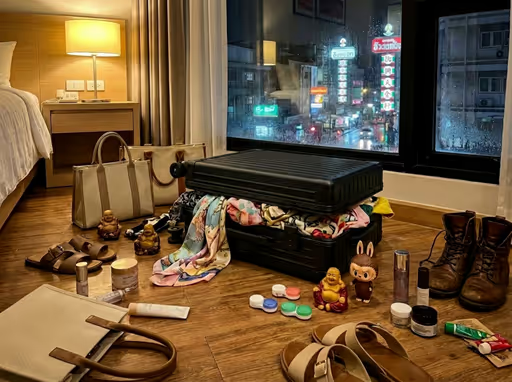
Shopping in Bangkok: How I Ended Up Spending Double My Travel Budget
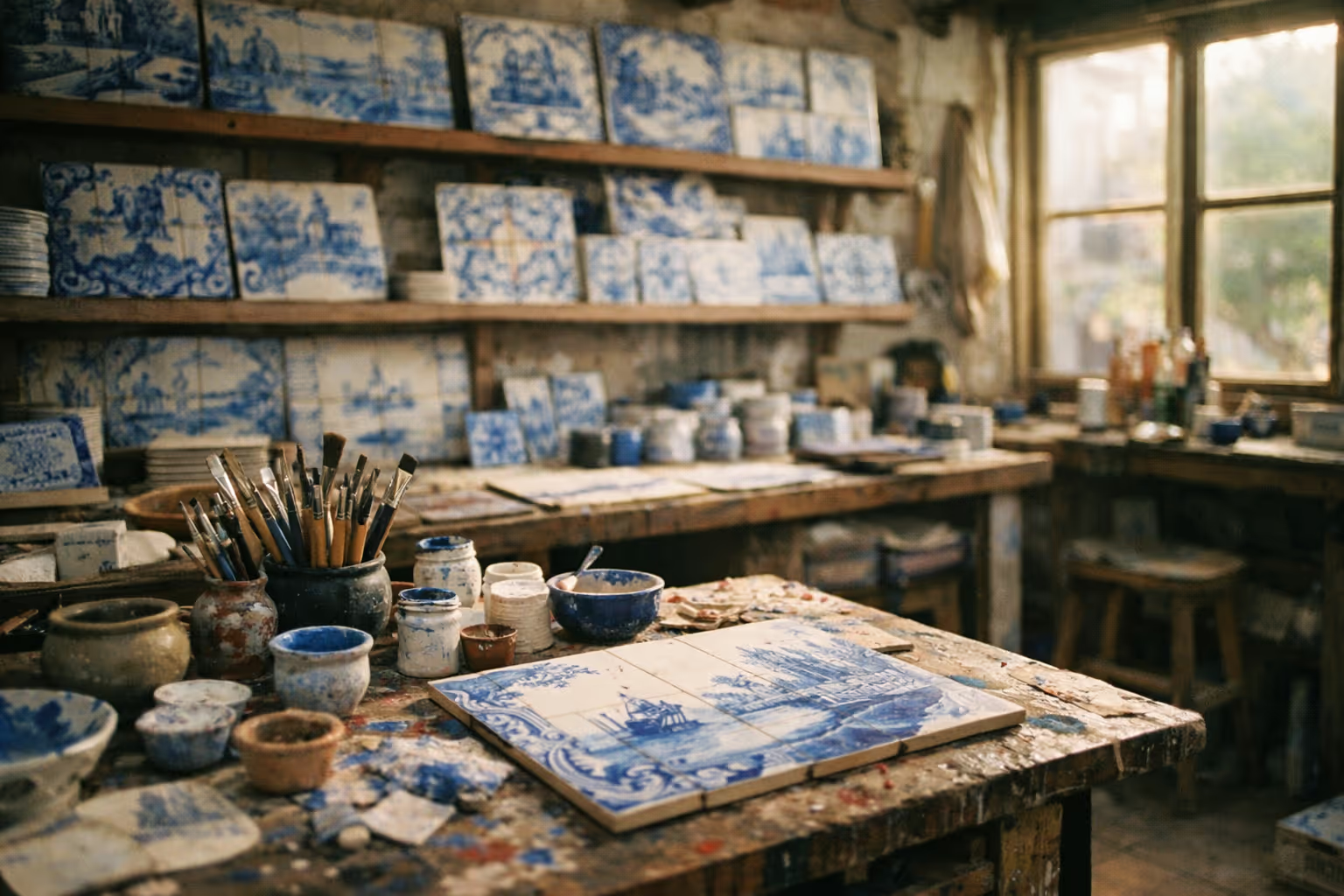
Three Days in Porto: Cellars, Azulejo Tiles, and a Dinner Table