The Nocturnal Nomad: A Midnight Communion in the Atacama
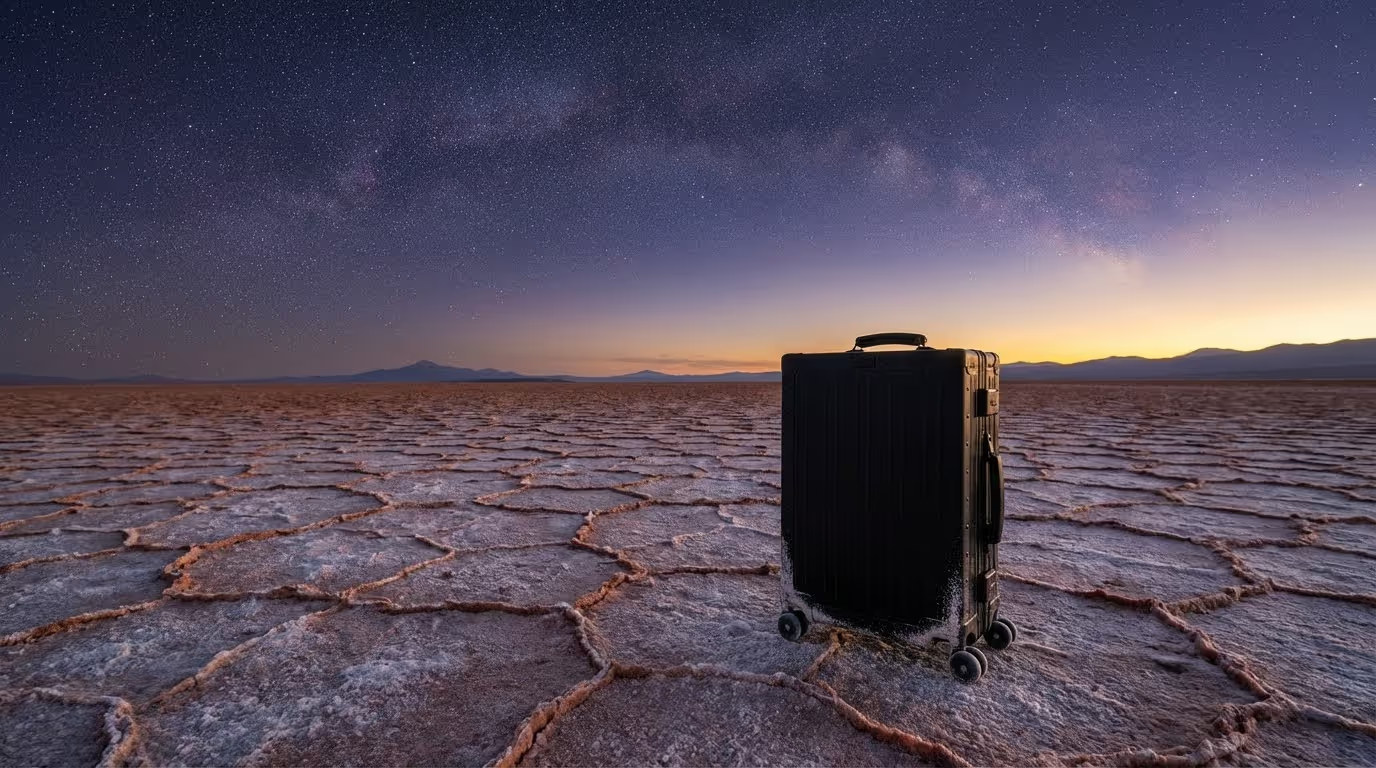
When the Sun Drops into the Pacific
By day, San Pedro de Atacama is a palette of terracotta and bone-dry salt flats. But as the sun gradually dips, the "Nocturnal Nomad" emerges. This isn't just a trip to a destination; it’s a trip to the edge of the galaxy. Here, at 2,400 meters, the atmosphere is so thin and dry that the stars don’t just twinkle, they burn with a steady, unblinking intensity.
The Logistics of the Infinite: Packing for a -10°C Midnight
In the Atacama, the temperature swing is a physical weight. You can start the day in a linen shirt and end it looking like a "sumo wrestler" in every layer you own.
My suitcase was more of a climate-controlled vault for this trip. Inside, I’d stowed the essentials for high-altitude survival:
Starting from thermals, high-performance base layers (the "second skin") and a windproof down jacket to heavy-duty lip balm and eye drops. The air here has less than 8% humidity; the desert tries to drink you.
I also carried a full-frame camera and a wide-angle f/1.8 lens, essential for gathering the faint light of distant nebulae without the "grainy soup" of high ISO noise.
The Silence of the Altiplano
I found myself standing on a remote patch of the Altiplano, far from the faint light-leak of town. The silence was absolute, no wind, no birds, just the hum of my own heartbeat.
When I looked up, the Milky Way wasn't a faint smudge; it was a dense, glowing river of silver and charcoal. I saw the Magellanic Clouds, dwarf galaxies visible only from the Southern Hemisphere, hanging like ghost-patches in the dark.
Pro-Traveler Nuance: Don't just look for the stars. Look for the "dark constellations." Indigenous Andean cultures didn't just see the light; they saw the shapes in the shadows, the llama, the fox, the shepherd, etched into the dark dust clouds of the Milky Way.
Finding Scale in the Dark
There is a profound humility in astrophotography. You set the tripod, lock your bag as a stabilizer against the occasional gust, and open the scarf-wrapped camera. In that half-minute of waiting for the shutter to close, time feels suspended.
Watching a globular cluster, a tight ball of a hundred thousand stars, through a 16-inch telescope changes you. It makes your earthly problems feel wonderfully, mercifully small. I didn’t just come back with photos; I came back with a recalibrated sense of perspective.
The Long Walk Back to the Self
As the clock ticked toward 4:00 AM, the cold finally began to seep through my boots, a sharp reminder that I was merely a guest in this high-altitude theater. I began the slow process of packing. In the dark, your relationship with your gear becomes intuitive. You don't look for zippers; you feel for them. I felt the familiar, rugged texture of my accessory case, a silent anchor in a landscape that felt ever expanding.
Packing in the desert at night is a rhythmic ritual. Each lens capped, each layer folded, each memory tucked away. I realized then that while I had come to see the stars, I was leaving with a newfound appreciation for the "vessel." To explore the infinite, you need a reliable "home base", even if that home is just a hardshell gear case sitting on dust.
The Dawn of a Different World
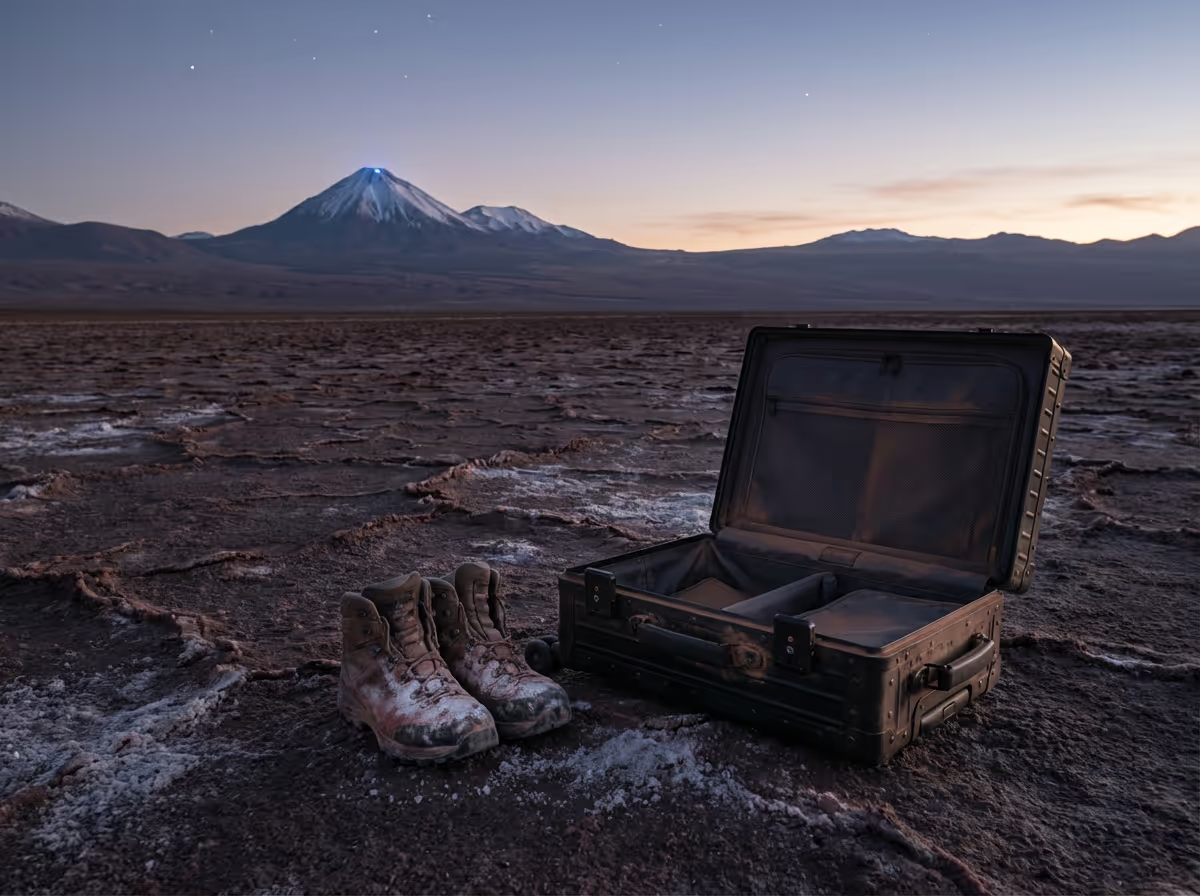
By the time I came back and crawled into my bed at the lodge, the first hint of pre-dawn blue, that thin, electric "nautical twilight", was touching the peak of the Licancabur volcano. My boots were caked in white salt and red ash, and my fingers were numb, but my mind was luminous.
I lay there for a moment, watching the stars fade one by one as the atmosphere thickened with the coming sun. The Atacama reminds you that we aren’t just on this planet; we are drifting through a deep, sparkling ocean. We spend so much of our lives looking down at our feet or into our screens, forgetting that the greatest show in existence is happening right above our heads, every single night, for free.
Final Thoughts: Carrying the Light Home
As I zipped my luggage one final time for the flight home, I noticed a fine layer of desert dust trapped in the seals. I decided not to wipe it off. It was a souvenir.
The Nocturnal Nomad isn’t someone who hates the light; they are someone who understands that the dark is where the truth is hidden. I arrived in Chile looking to click wonderful photographs to add to my portfolio. I left with a quiet, steady internal flame, a reminder that no matter how chaotic the world feels, the stars are still there, burning with a cold, magnificent indifference that is, in its own way, the ultimate comfort.

48 Hours in Lisbon: Fado, Pastéis, and the Ghosts of Alfama
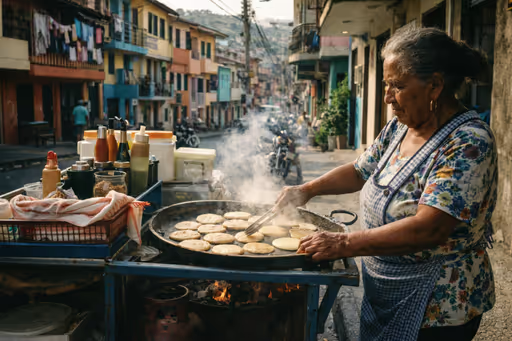
Lost and Found in Medellín: How a Wrong Turn Led to the Best Arepas of My Life
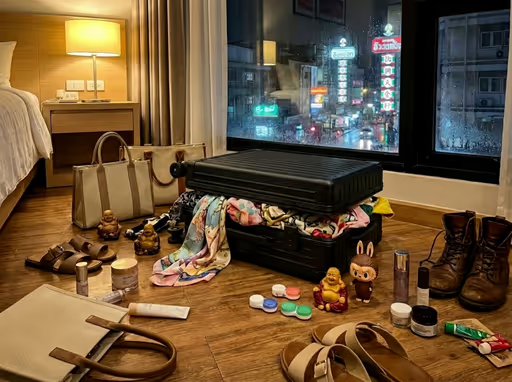
Shopping in Bangkok: How I Ended Up Spending Double My Travel Budget