Aconcagua: Endurance, Kindness, and the Walk Back Down
Aconcagua: Endurance, Kindness, and the Walk Back Down
I did not come to Aconcagua, Argentina, just to stand on a summit.
I came to learn who I become when I am tired, alone, and uncomfortable. Long before summit day, the mountain began stripping things away, ego, expectations, the need to prove anything, leaving only effort, patience, and a quieter kind of self-reflection.
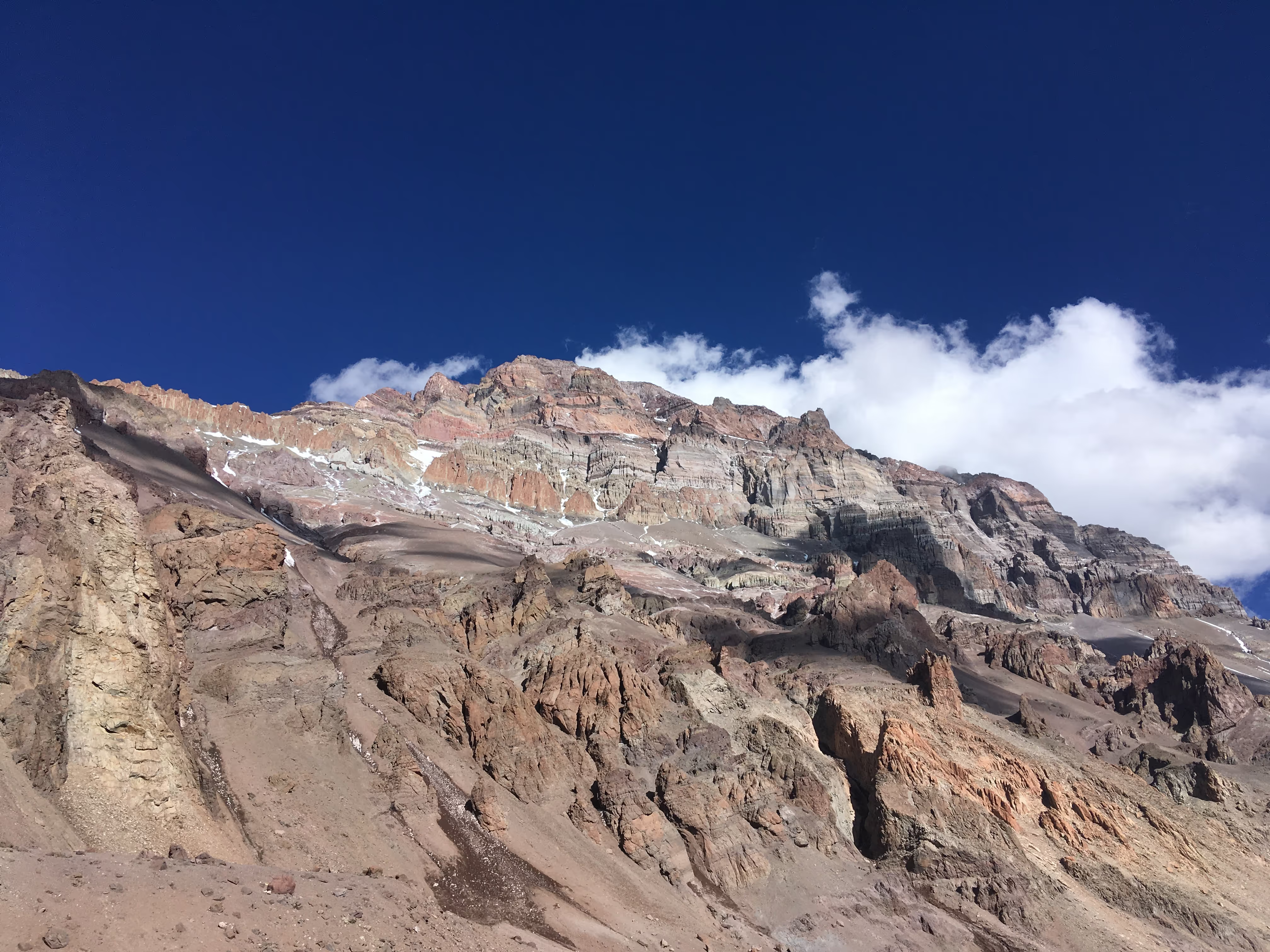
Aconcagua had lived in the back of my mind for years. The highest mountain outside Asia and the tallest on six continents, it carries a reputation that reaches beyond altitude. It is not only about lungs and legs. It is about endurance, discipline, and the mental strength to keep making good decisions when everything in you wants the simplest one.
I chose to take it on solo. Not because I wanted isolation, but because I wanted accountability. No one to outsource pacing to. No one else’s confidence to borrow. Every choice would be mine, including the consequences.
Training for thin air
Preparation became a lifestyle.
For four to five months, I trained consistently: CrossFit, endurance-focused cardio, and long stair climbs in a high-rise building in Tysons. Step after step, I rehearsed the reality I could not yet feel, thin air, heavy legs, long summit hours that do not care about motivation.
Physical conditioning mattered, but I knew mental resilience would matter more. Strength helps you move. Clarity helps you survive.
Unexpected warmth on a cold mountain
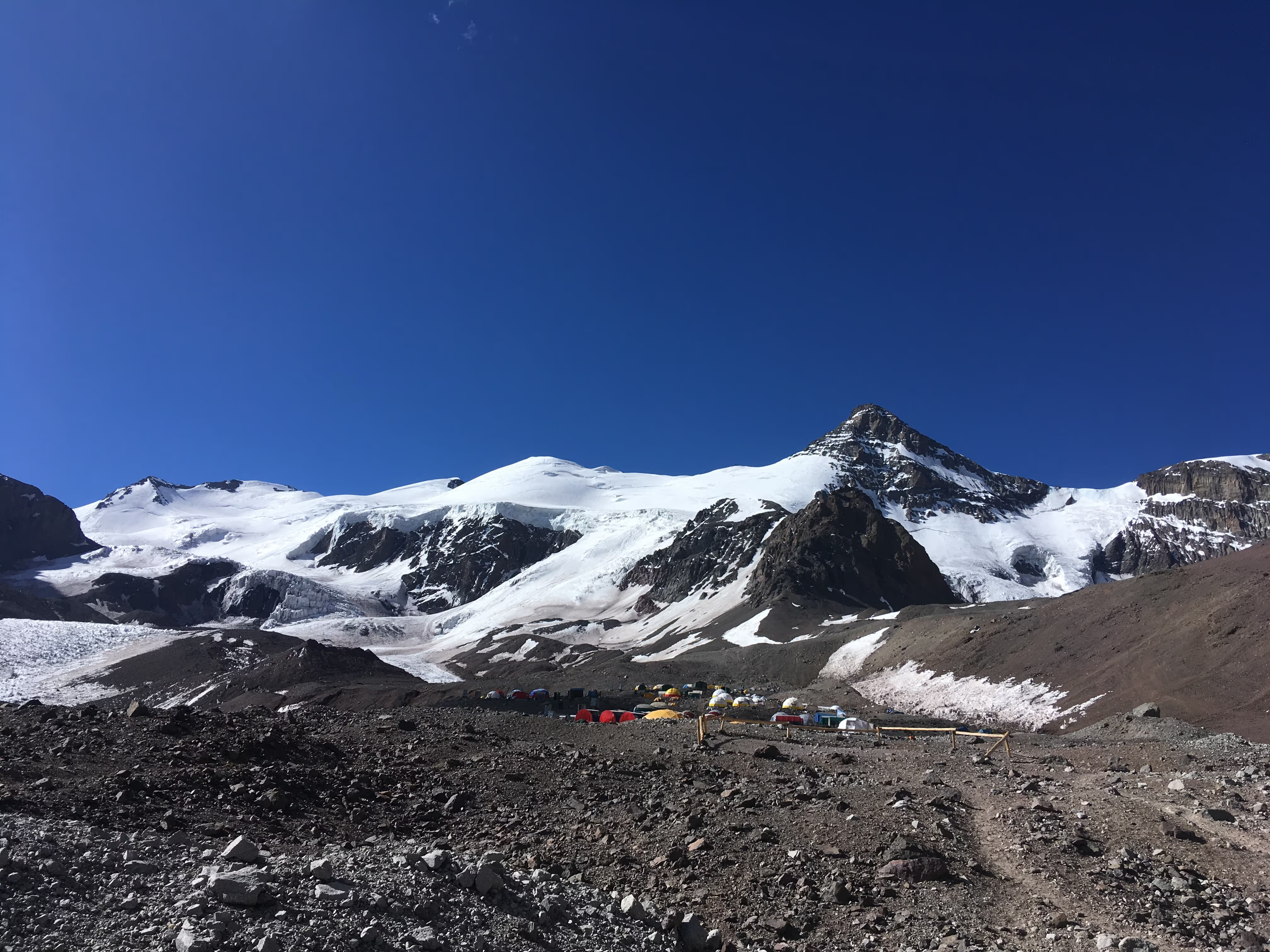
Early in the hike, I met a Canadian couple along the trail. Even though I had chosen to climb alone, those brief connections carried an unexpected warmth. We swapped stories, shared encouragement, and at one point attempted to cook noodles in conditions that made “simple” feel like a joke.
The meal failed spectacularly. The laughter did not.
On a mountain like this, humor is not entertainment. It is oxygen for the mind.
By the second day, the terrain grew drier and more exposed. The pace slowed naturally. Every step demanded intention. My pack felt heavier. The air felt thinner. I focused on breathing steadily, reminding myself that efficiency mattered more than speed.
As I gained elevation, the mental challenge sharpened into something undeniable. Climbing solo meant every decision was mine: when to rest, how much water to drink, when to push, when to hold back. The solitude was empowering, but it was also honest. It does not flatter you. It tells you the truth.
Base camp, and the first real warning
I reached base camp between 4 and 5 p.m., exhausted and dehydrated. No amount of water seemed to help. That night was rough. I forced down some noodles, and my body rejected them. I threw up, sipped water in small amounts, and tried to sleep in the thin, restless way you do at altitude.
The next day, I chose restraint over ambition. Instead of climbing higher, I acclimatized: slow walks up and down nearby slopes, letting my body learn what it needed to learn. It was not physically demanding, but it required patience.
On high mountains, knowing when not to push is as important as knowing when to move.
Summit day begins in the dark
Summit day started before dawn.
I woke up already exhausted, not the kind of tired sleep fixes, but the deeper fatigue that accumulates quietly over days at altitude. The cold was immediate. My hands felt clumsy inside my gloves, and every movement took effort.
Outside the tent, my headlamp illuminated only a narrow strip of trail. Beyond that, darkness. The mountain did not feel hostile. It felt indifferent, which is worse in its own way. Indifference does not negotiate.
I started walking.
Within minutes, the cold took over my hands. Not discomfort. Pain, sharp and consuming. I shook my fingers, clenched and unclenched them, did everything I could think of. Nothing worked. I stopped, and the thought landed with a kind of brutal simplicity.
I cannot do this. Not like this.
For the first time that morning, doubt became real. This was not about mindset or motivation. It felt like a hard limit.
As I stood there, one of the climbers I had met earlier noticed me struggling. He walked over without hesitation. He did not ask many questions. He looked at my hands, understood immediately, removed my gloves, and pulled my hands inside his jacket, pressing them against his body to share his warmth.
I stood there quietly, hands numb, resting against a stranger’s chest as feeling slowly returned.
No speeches. No pep talk. Just instinctive kindness at the exact moment it mattered.
That moment changed something.
Not only because my hands warmed up, but because my confidence did. Someone had seen me at my weakest and stepped in without question. My breathing slowed. The pain eased. I put my gloves back on, nodded my thanks, and started moving again.
The mountain did not get easier after that.
But I did.
Mechanical hours, a quiet summit
As the hours passed, everything became repetitive and precise. Step. Breathe. Pause. Step again. My legs felt hollow. I stopped thinking about the summit and focused on staying upright and avoiding mistakes.
When the sky finally began to lighten, it did not bring comfort. It brought scale. The mountain opened up, vast and indifferent, making everything else feel distant and irrelevant.
Reaching the summit was quiet.
No celebration. No rush of emotion. Just relief, and respect. I did not stay long. The summit is optional. Getting down is not.
The descent, and the broken hut
The descent demanded the same focus as the climb.
My legs were unsteady. My reactions were slower than they should have been. Fatigue makes simple terrain deceptive. I forced myself to stay present, checking my footing and breathing again and again. There was no relief yet, only responsibility.
By the time I reached an old, broken hut, my mind stopped working properly. I stood there trying to decide which way down, left or right, but I could not tell. Both paths disappeared into darkness. And I knew one thing with certainty: if I chose wrong, I did not have the energy to climb back up.
It was around 8 p.m. The cold was brutal. I had maybe thirty minutes of daylight left.
I radioed the rangers at base camp, asking for directions to Camp 4. The connection was poor. They did not speak much English. We went back and forth, repeating ourselves, losing precious time. The instructions only made things worse.
Then I realized my headlamp was dead.
I had kept it on since early morning without thinking.
Now I had no light. No clear direction. And the trail dropped into deep valleys on both sides. One wrong step in the dark would not be survivable.
I asked if someone could come from Camp 4. It was only about a mile away. They said no one was available at Camp 4 or Camp 3. Rescue would have to come from Camp 2. They told me it would take about two hours.
I told them I would wait.
They stayed on the radio, repeating the same warning: Don’t sleep. If you sleep, your consciousness will fade.
I found shelter in the hut, barely six by four feet, no roof, broken walls. I crouched into a corner and wrapped myself with the flags from my summit pack to block the wind. The wind chill was around minus 27 degrees. I focused on staying awake. I waited.
Two hours passed.
Then three.
No one came.
It was almost midnight. My radio battery died. I was alone in complete darkness. Above me, the sky was filled with stars, and I could see storms flashing near the summit.
I drifted in and out of consciousness.
My wife kept appearing in my thoughts. She was pregnant at the time. I imagined my child being born. Then a thought arrived, quiet, steady, unmistakable.
I may not be alive to see that.
That was the moment.
Waiting was no longer safer than moving. I stood up, packed my bag, and decided I would go down, left or right, and accept whatever followed.
As I stepped out of the hut, I saw them.
Two headlamps moving slowly up the mountain.
Relief hit harder than exhaustion. The rangers reached me, handed me an energy bar, and asked if I could walk. I told them yes. Just show me the way.
One walked ahead, the other behind, guiding each step as the trail dropped sharply into the valley.
Twenty-five minutes later, we reached Camp 4.
My tent.
I crawled into my sleeping bag and shut down completely.
Before they left, I thanked them, from the bottom of my heart.
What stayed with me
What stayed with me most after Aconcagua was not the summit.
It was that night near the broken hut. The realization that risk is not abstract. It is personal. Thinking about my wife, and the child she was carrying, the mountain stopped being a challenge and became a mirror. Every decision suddenly carried weight beyond me.
That experience changed how I think about risk. Not as something to avoid, but as something to respect. There is a difference between pushing limits and ignoring consequences. On the mountain, that difference is immediate. In life, it is quieter, but no less real.
I did not come back feeling invincible.
I came back calibrated.
The summit was not the point.
The clarity was.
“The mountain didn’t make me stronger. It made me more honest. And that’s the kind of strength that stays.”
Narr S., Aconcagua Expedition, 2018

48 Hours in Lisbon: Fado, Pastéis, and the Ghosts of Alfama
Lost and Found in Medellín: How a Wrong Turn Led to the Best Arepas of My Life
Shopping in Bangkok: How I Ended Up Spending Double My Travel Budget