Istanbul, Where the Commute Crosses Continents
Istanbul, Where the Commute Crosses Continents
Arrival, and the City’s First Instruction
I arrived with the usual travel posture, slightly guarded, scanning for what could go wrong. Istanbul didn’t reward that kind of vigilance.
The air had a trace of salt. Not dramatic, just enough to remind you there’s water nearby doing its slow, constant work. The streets felt layered, like the city had been built in drafts and never bothered to erase the earlier lines.
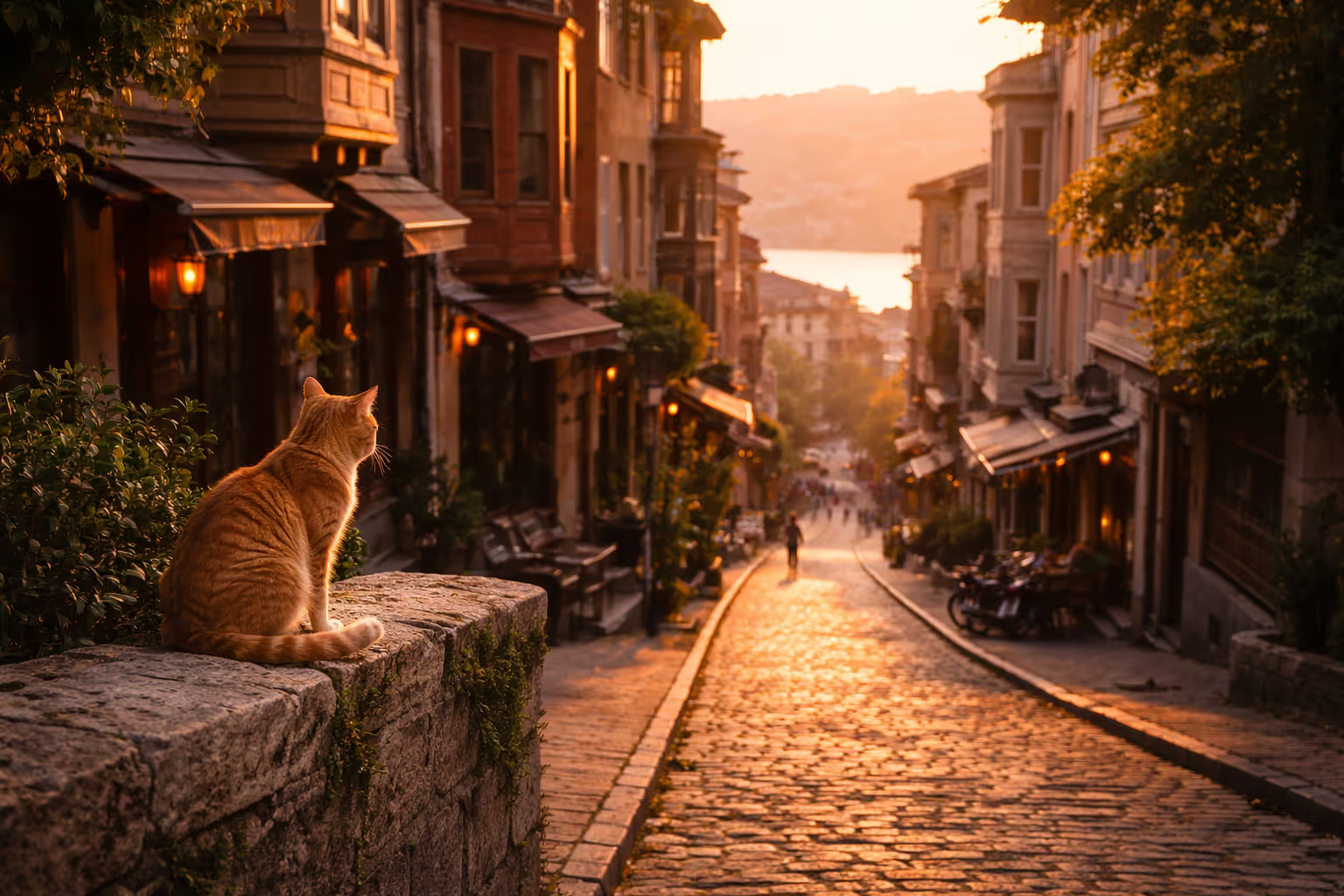
Morning light caught on stone and made everything look newly detailed. Corners sharpened. Window frames stood out. A cat sat on a low wall like it had an appointment.
I tried to orient myself with a map and failed in the immediate way that maps fail in hilly cities. Up was always steeper than expected. Down always led somewhere tempting. Istanbul’s first instruction was simple: stop pretending you will keep it tidy.
The Staircase Problem, and a Small Reset
My second instruction came from my legs.
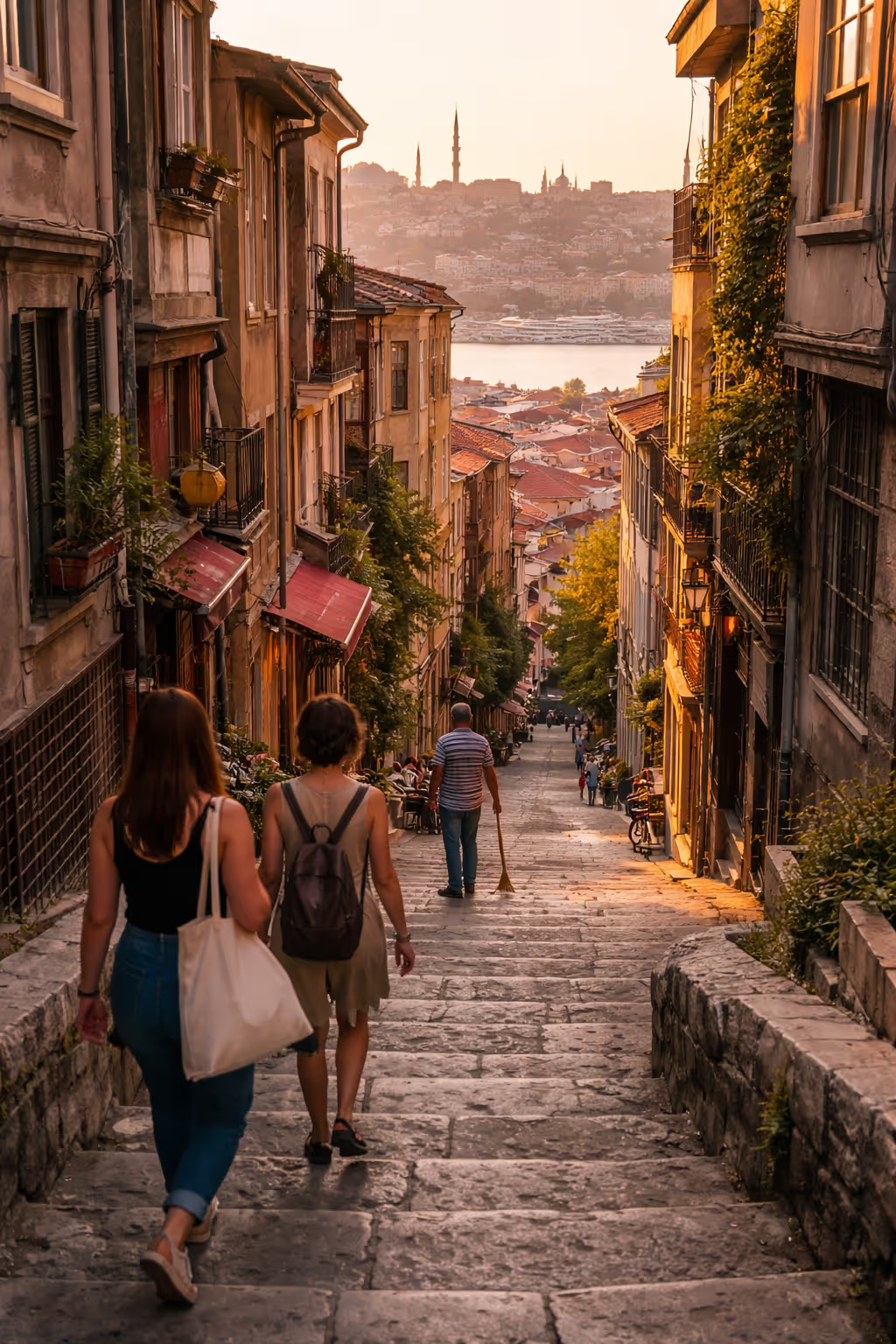
I took a street that looked easy and found myself halfway up a staircase that had no interest in being gentle. At the top, the reward was not a landmark. It was a pause. A pocket of quiet. A view where rooftops layered into each other and the water sat beyond them like a boundary that was also an invitation.
A shopkeeper swept his doorway with the steady focus of someone who has done it every day and still cares. A scooter slipped past without drama. A boy carried something too large for his arms and did it anyway.
I realized I’d been thinking about Istanbul like a city to “see.” It felt more like a city to adjust to, the way you adjust your breathing when you start walking uphill.
The Ferry, and the Moment the Map Finally Made Sense
Eventually, the water pulled me in.
I followed the crowd toward the ferry, which is a small miracle of urban life. No ceremony, no suspense, just a steady stream of people who look like they are going somewhere normal. You step onto a boat the way you’d step onto a bus, except the air is better and the horizon is moving.
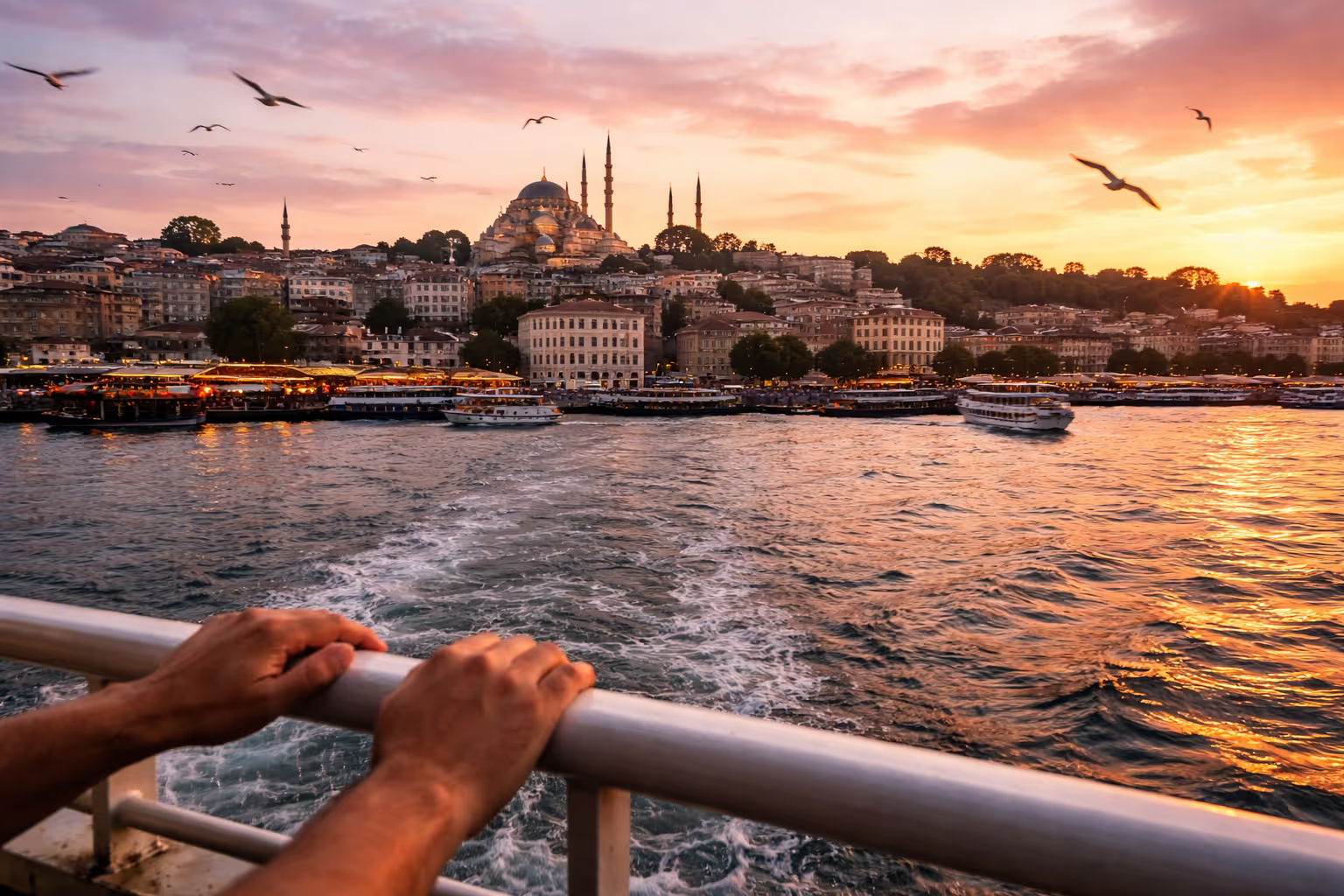
On deck, the city rearranged itself. Domes and minarets shifted depending on where you stood. Bridges cut clean lines across the water. Birds hovered like they were waiting for something specific, then changed their minds and drifted off.
I leaned on the railing and watched the wake divide the surface into two neat halves. The city on one side looked different from the city on the other, not in a dramatic way, but enough to feel like a fresh draft of the same idea.
That was the moment Istanbul clicked. It was not one city. It was a rhythm of crossings.
A Market Without a Checklist
Later, I wandered into a market and felt my brain try to do its usual thing: rank, compare, decide.
Color was everywhere, but contained. Piles and jars, metal, glass, paper. Voices threaded through the aisles. There was the faint sound of someone counting change, the soft scrape of a box being dragged across stone, a brief laugh that rose and disappeared.
I moved slowly, not because I was trying to be mindful, but because the place demanded it. It was the opposite of a scroll. You can’t take it all in at once, and the attempt feels silly.
A vendor handed me a small sample with a gesture that didn’t ask for a performance in return. I nodded thanks. It tasted sweet and sharp at the same time, like it was designed to wake you up without shouting.
I bought something simple and left before my attention got messy. Istanbul had been generous. I didn’t need to be greedy.
The Courtyard Rule
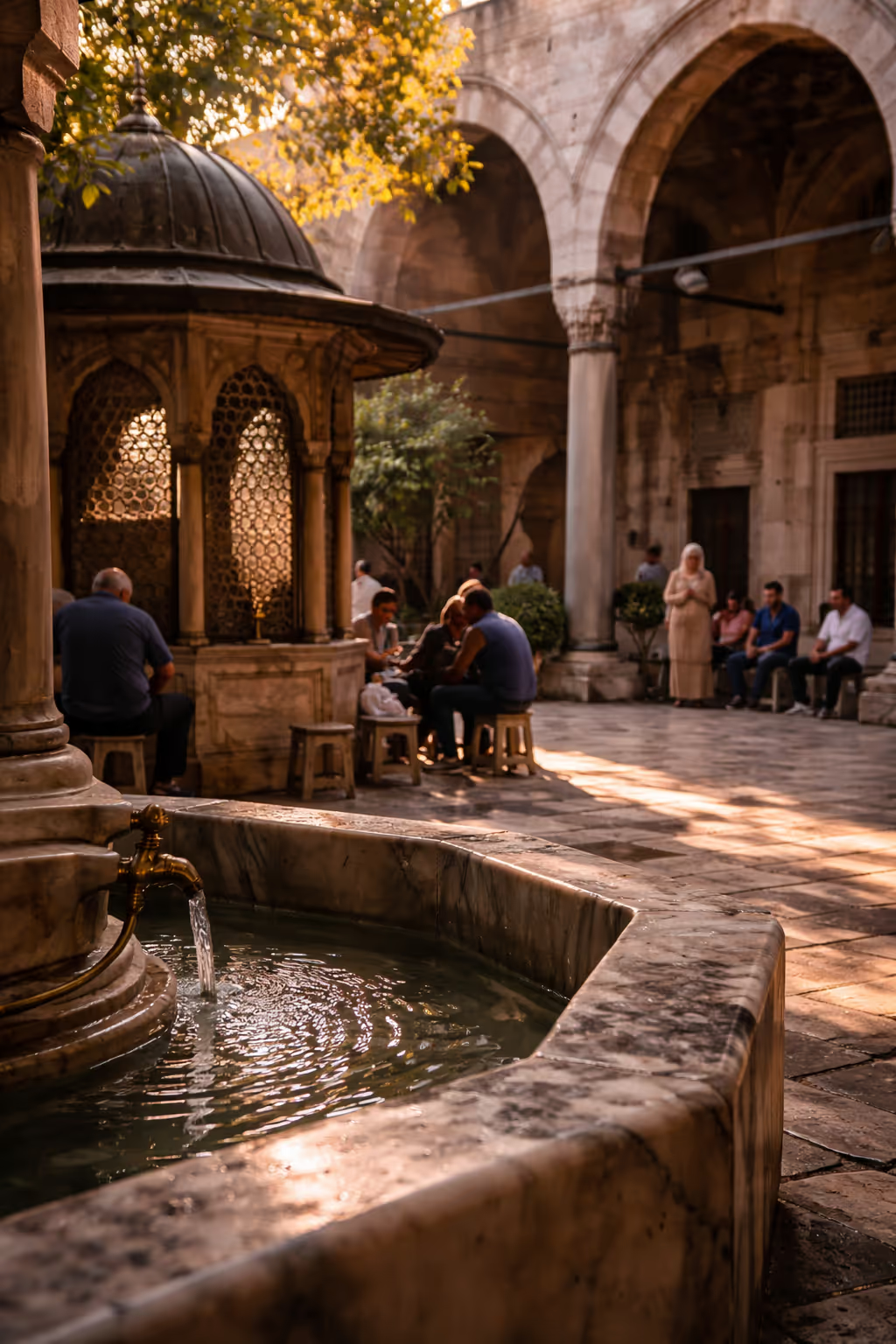
One afternoon, I stepped into a courtyard and immediately lowered my volume, even though nobody asked me to.
The ground was cool stone. The air felt still, like the space had its own climate. People moved with quiet intention, not solemn, just respectful. The city’s energy stayed outside the walls, continuing without offense.
I sat on the edge of a low fountain and watched light shift across the surface of water. It made a pattern that felt calm in a practical way, like it had been calming people for a long time.
A child ran past, then stopped, then ran again. Someone adjusted a scarf. Someone else checked their phone and put it away quickly, as if embarrassed by the intrusion.
It wasn’t a “moment” in the cinematic sense. It was a reset, and it felt honest.
The Wrong Turn That Became the Better Street
I tried, once, to walk directly to a viewpoint. Istanbul responded by giving me a different one.
I turned the wrong way, found myself on a narrow street, and watched a sequence of ordinary life unfold like a short film with no plot. A man carried a tray carefully with both hands. A woman argued gently with a friend, then laughed and touched her arm. A cat negotiated a sunny patch of pavement with a seriousness that felt almost professional.
The street smelled faintly of bread and exhaust and something herbal I couldn’t place. The buildings leaned in slightly, not literally, but in the way older streets feel intimate.
I took a photo, then stopped taking photos. The street wasn’t trying to impress me. It was simply functioning, and that was exactly what made it good.
Evening, When the Skyline Becomes a Silhouette
Toward dusk, Istanbul shifted into softer materials.
The air cooled. The sky went pale, then warmer, then darker. Lights came on in small clusters. The water reflected them in broken lines, as if the city was writing in a loose script.
I found a spot where I could see the skyline without needing to name it. Domes and towers turned into silhouettes. Ferries kept moving, still on schedule, still full of people going somewhere ordinary.
I watched a couple share a quiet conversation without performing it for the world. A group of friends leaned close around a phone screen, laughing in that quick, bright way that doesn’t translate but doesn’t need to. Someone stood alone at the railing and stared at the water like it was a thought they were trying to finish.
I stayed longer than planned. It felt like the correct decision.
What Stayed With Me
Istanbul didn’t feel like a city of highlights. It felt like a city of crossings.
It taught me to stop treating movement as friction. In Istanbul, movement is part of the identity. Hills that make you earn your view. Streets that refuse to be linear. A ferry ride that quietly resets the day. A courtyard that lowers your volume without telling you to.
I left remembering the pauses more than the landmarks. The railing on the ferry. The cool stone under my hand. The way the skyline rearranged itself every time I changed sides.
Some cities give you stories. Istanbul gives you perspective, and it changes depending on where you stand.

48 Hours in Lisbon: Fado, Pastéis, and the Ghosts of Alfama
Lost and Found in Medellín: How a Wrong Turn Led to the Best Arepas of My Life
Shopping in Bangkok: How I Ended Up Spending Double My Travel Budget