Jodhpur: The Blue Dream That Quietly Found Me
Jodhpur: The Blue Dream That Found Me
Entering the Maze
We arrived in October. People warned me the city was a maze. The word stayed with me.
A maze does not confuse you. It asks you to slow down.
This time, I planned nothing. No schedules. No camera. We chose a boutique haveli tucked deep inside the old city, far from polished luxury. I wanted Jodhpur to unfold on its own terms.
The taxi spiraled through lanes that narrowed with every turn. At one point, I wondered if we would abandon our luggage and walk. Then a massive wooden door creaked open, revealing a haveli hidden behind impossibly tight alleys. Inside were green courtyards, carved balconies, and stone warmed by centuries. It felt less like checking in and more like arriving somewhere that had been waiting.
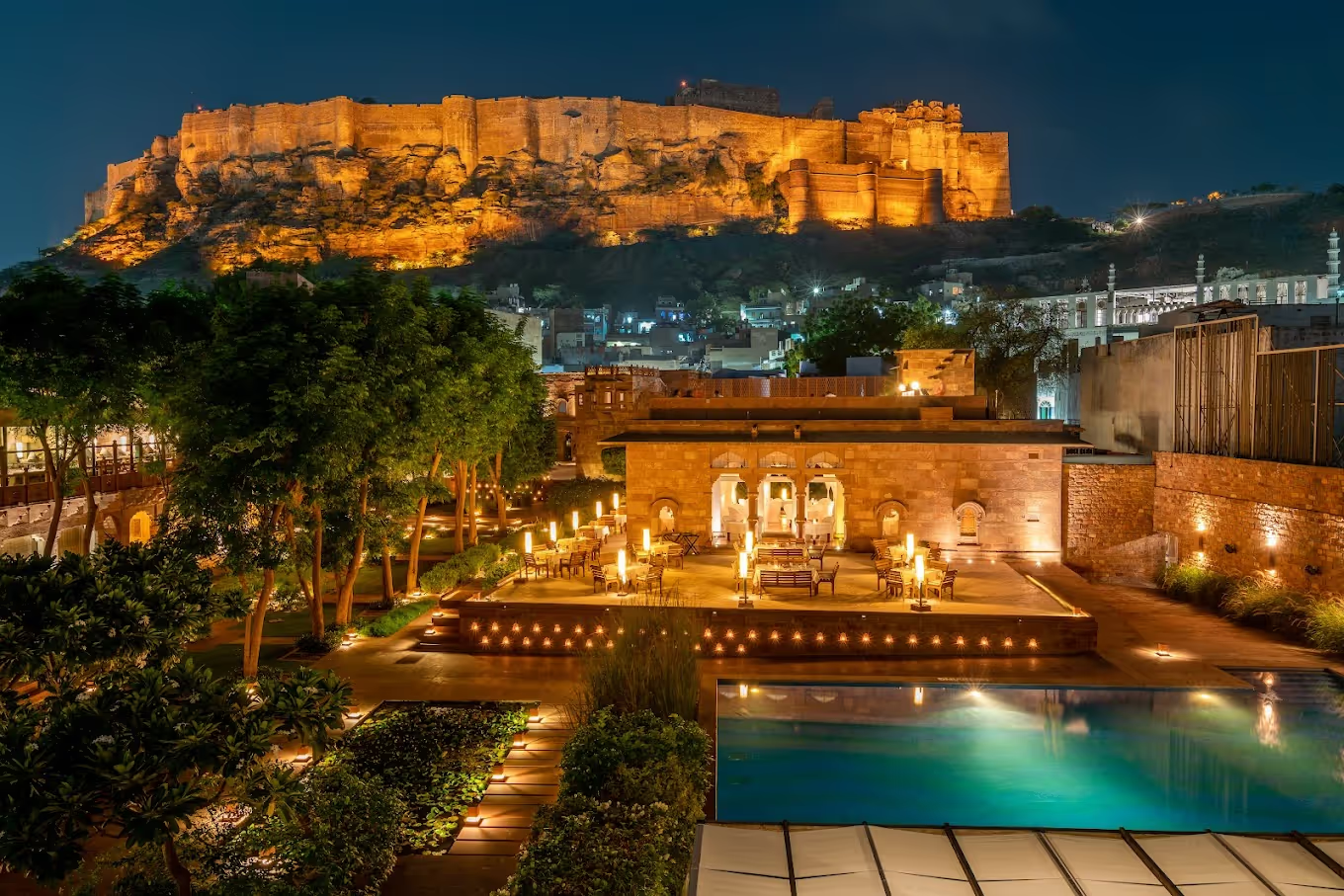
By evening, we climbed to the rooftop. There it was. Mehrangarh, glowing in molten gold, watching over scattered blue houses. The breeze carried charcoal, old stone, and faint music drifting up from the city.
Before dinner, I asked one of the RAAS staff if he could sit with us for a few minutes and tell us stories of the fort. He agreed instantly, with a soft smile. He spoke of old battles, fierce rivalries, shifting alliances. Gates still bear cannon scars. Handprints of royal women near Loha Pol whisper of final decisions. A secret passage, he said, is rumored to connect the fort to RAAS itself.
“Tomorrow,” he said quietly, “walk the fort as if it remembers everything.”
And just like that, the night deepened.
Dinner arrived. Laal maas. Ker sangri. Bajra roti. Dahi kebabs. A simple, comforting gulab lassi. Candlelight swayed. The fort shimmered above.
It was romantic, but quietly so. Not staged. Not dramatic. Just deeply human.
A silence settled between us that felt full, not empty.
Mehrangarh: Morning With Echoes
The next morning, we entered Mehrangarh with a guide. He pointed out hidden tunnels, queens’ jharokhas, the 400-foot-high battlements, and seven massive gates guarding stories of battle, music, betrayal, and devotion.
Despite the harsh sun outside, the interiors stayed cool. A marvel of Rajasthani architecture that thinks more deeply than it speaks.
From the ramparts, the Blue City spread endlessly below, unified by color, belief, and time.
Umaid Bhawan, Jaswant Thada, and the Six Roads
Umaid Bhawan felt like stepping into a different India. Sandstone luxury. Manicured lawns. Corridors echoing softly.
From there, we went to Jaswant Thada, where marble glowed at sunset like a warm lantern. The silence there was not empty. It was reverent.
Sardar Market arrived like a rush. Bandhani fabrics fluttered. Spices hung thick enough to taste. At one junction, six roads met. One led to Jain Street, spotless and calm. Another to Marwari Street, rich with trade. The remaining lanes tangled into workshops, dyeing units, pottery stalls, and family-run shops older than memory.
I ate a steaming mirchi bhaji, probably the best in Jodhpur.
Everyone spoke of the Maharaja with pride. Not government. Not policy. Just the king.
That loyalty felt unforced. Deeply rooted.
Walking Without a Map
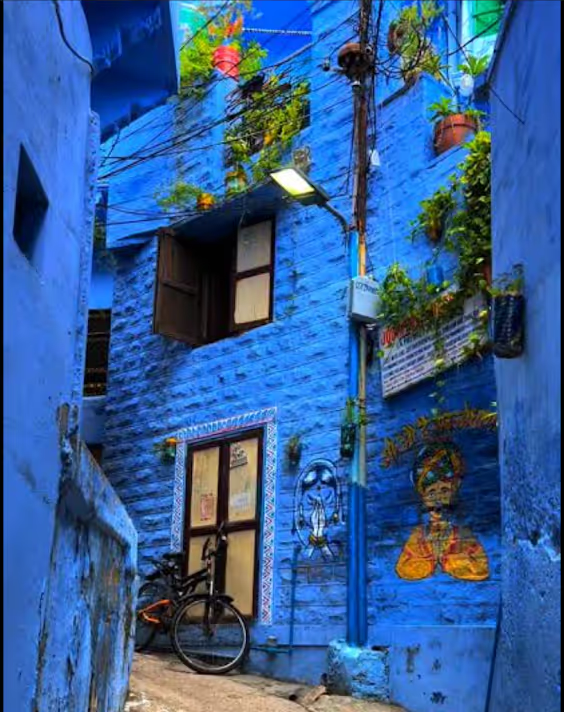
Before evening settled in, I slipped out alone and left my phone behind.
The lanes allowed barely two people to pass, yet small cars squeezed through with practiced ease. Jodhpur spoke through scent first. Leather. Spices. Dye. Metal warmed by sun.
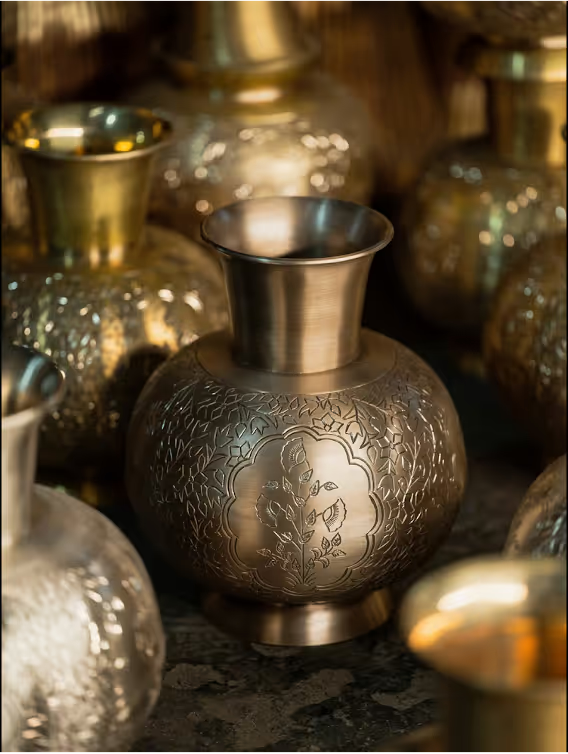
The city revealed itself through hands and heritage. Leather goods shaped patiently. Block-printed fabrics drying on rooftops. Brassware stacked without hurry. Silver hammered with quiet pride.
I wandered without direction, choosing whichever lane felt right. Some ended abruptly. Some folded into confusion.
And for the first time in a long while, I did not mind being lost.
After hours of walking, I sat near a tea stall under a banyan tree. Customers waited casually. The shopkeeper was nowhere to be seen. When he finally returned and served everyone, he turned to me and offered tea.
I told him I had no money. I had left everything behind.
He smiled and poured more milk than tea.
The first sip surprised me. Warm. Balanced. Comforting.
“Why is your tea so good?” I asked.
“Tea is normal,” he said. “It’s the customer who makes the day special.”
Some wisdom does not announce itself. It just stays.
Manai Village and Mharo Khet
The next day, we drove toward Manai village. Mharo Khet looked nothing like a desert should. Forty acres of green resting gently in golden sand. The farm walk was slow and grounding.
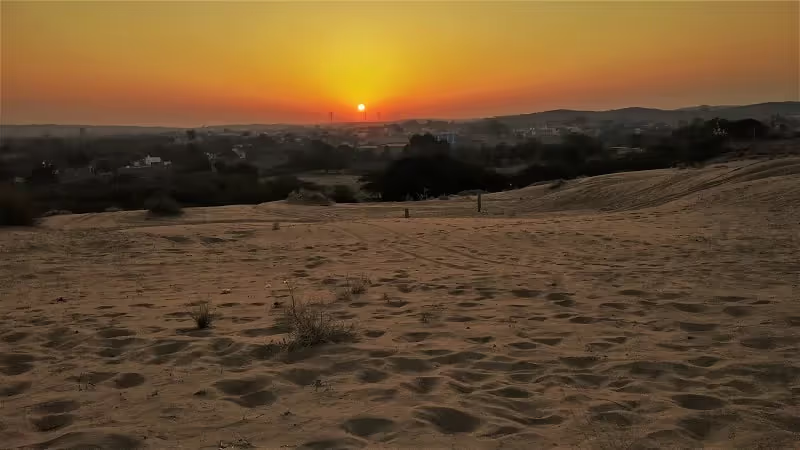
Later, at the edge of the Thar Desert, camels moved lazily as children laughed and tourists bargained. I sat quietly, watching the sky change color.
A desert sunset is not a view.
It is a feeling.
When the sun dropped, the cold arrived suddenly. The desert always decides when it is time to leave.
What Stayed With Me
It was the way the city taught me to slow down.
Stories were offered, not performed. Pride lived quietly in people, not loudly in monuments. Jodhpur did not overwhelm me. It did not try to impress me.
It absorbed me gently. Patiently.
Until I stopped looking for direction and let the city lead.

48 Hours in Lisbon: Fado, Pastéis, and the Ghosts of Alfama
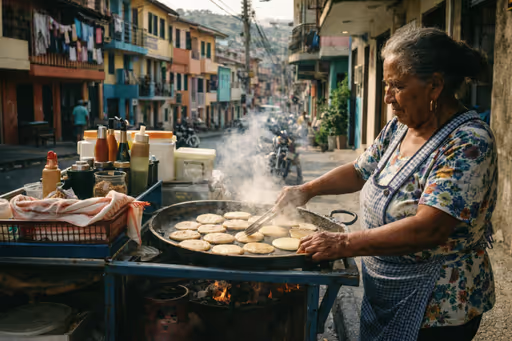
Lost and Found in Medellín: How a Wrong Turn Led to the Best Arepas of My Life
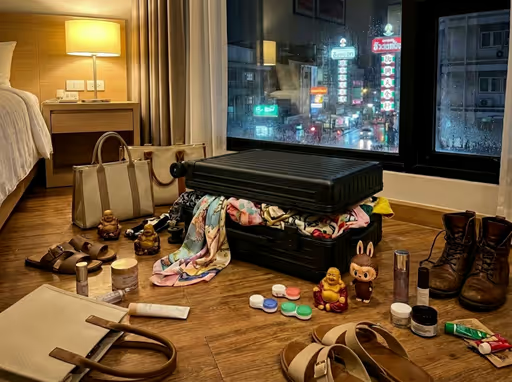
Shopping in Bangkok: How I Ended Up Spending Double My Travel Budget