Rome, in the Time It Takes to Drink an Espresso
Rome, in the Time It Takes to Drink an Espresso
Arrival, and the First Light That Looks Like Stone
I landed with the usual airport posture, shoulders slightly raised, brain still scrolling through the idea of the trip instead of the trip itself. Rome solved that quickly.
On the train into the city, the windows turned the outside into a moving sketch: low buildings, a sudden line of trees, a flash of graffiti that felt oddly elegant in the morning. The light was pale but confident, the kind that makes everything look like it has a surface worth touching.
By the time I reached my neighborhood, my phone had already tried to pull me into a checklist. I ignored it on purpose. The streets were doing a better job.
The first thing I noticed was sound. Not noise. Sound. Scooters threading through gaps like water, voices bouncing lightly off stone, the quick clack of someone walking with intent. My suitcase wheels rolled over uneven pavement and instantly announced that I was new here.
The Counter, the Coin, and the Small Theatre of Coffee
A bar in Rome is not a place you sit and settle in, at least not at first. It is a place you take your place.
I stepped up to the counter, tried to read the rhythm, and immediately made my first mistake: I hesitated like I was waiting to be invited. The person behind me did not judge me. They simply moved around me with the clean efficiency of someone who knows what they want.
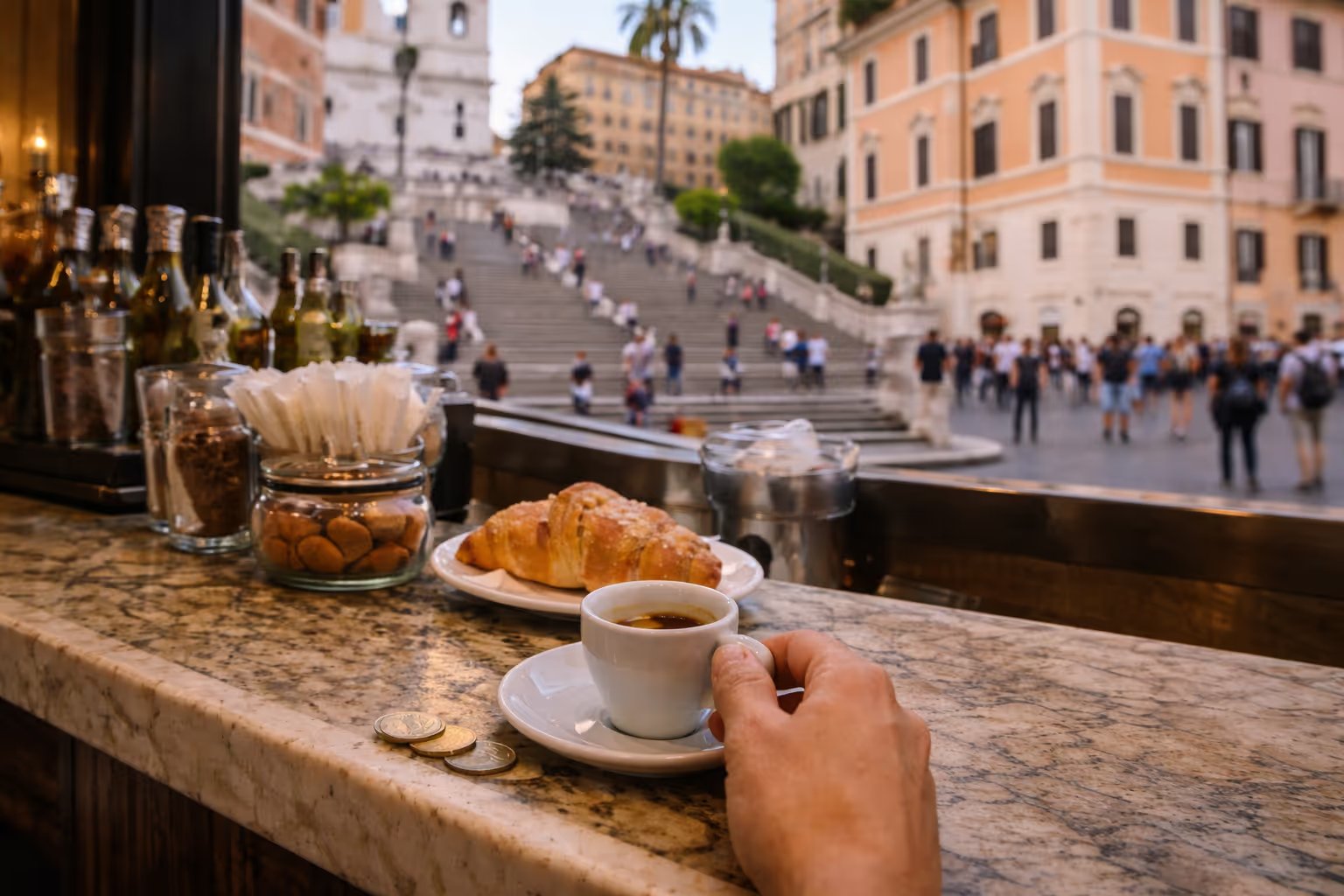
I ordered an espresso and a cornetto with a confidence I did not fully possess, then paid with coins that felt heavier than they should. There is something quietly humbling about money that is small enough to disappear into your palm.
The espresso arrived fast, dark, and exact. I drank it standing up, because that is what everyone else was doing, and because it felt right. Two sips in, my day rearranged itself. I did not feel caffeinated so much as aligned.
A man next to me nodded at my attempt to say thank you in Italian. It was not a conversation. It was permission.
A Wrong Turn That Became a Better Afternoon
I left the bar with a plan to walk somewhere specific. I did not get there.
Rome is good at bending routes. A street closes into a narrower street, which opens into a small piazza you did not know existed, which leads you to another street that looks like it belongs in a film you half remember.
At one point I followed what I thought was the direction of a landmark and ended up in front of a closed gate covered in vines. It was not on my map. It was not on my list. It was simply there, as if the city had placed it for its own reasons.
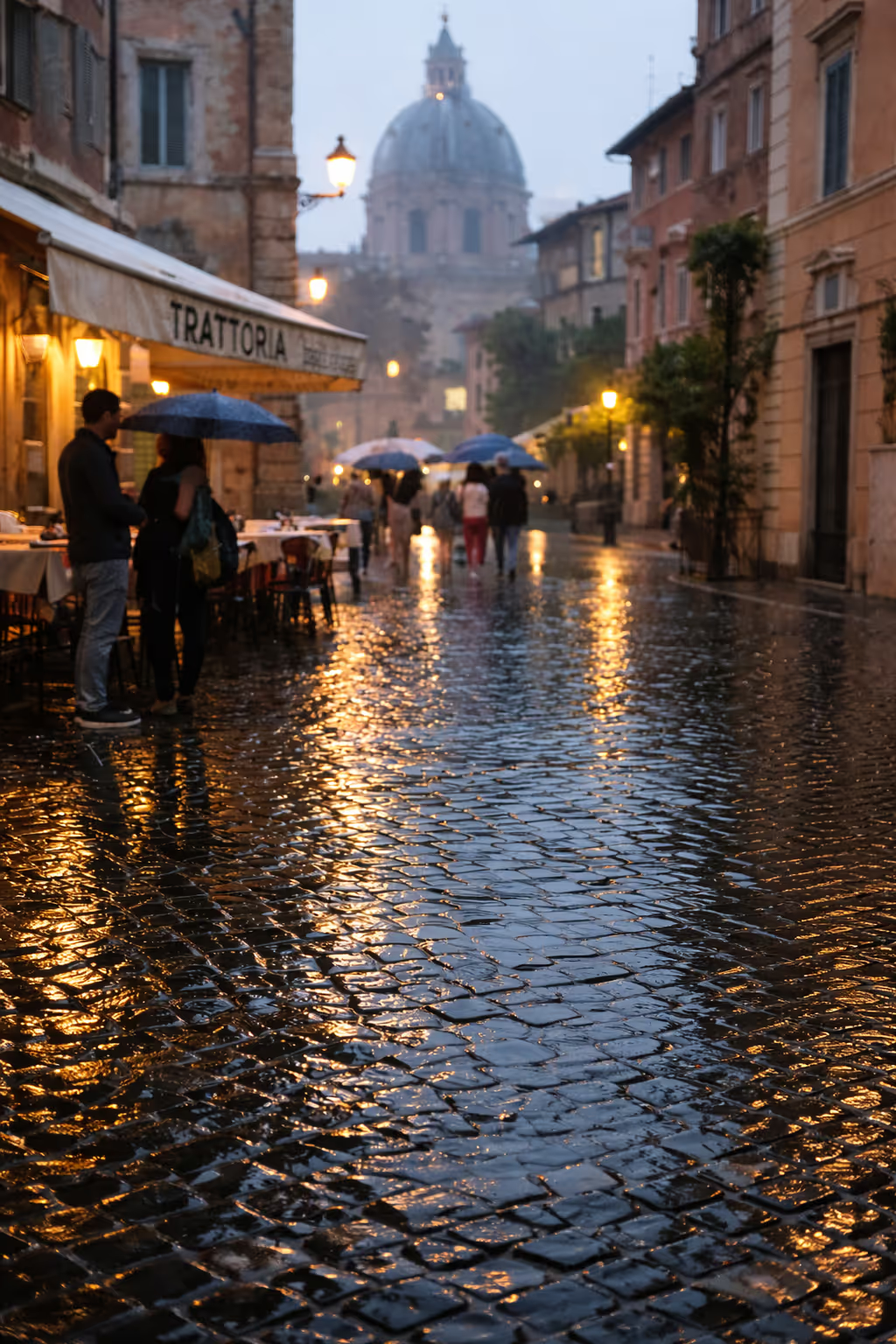
It started to rain lightly, the kind that barely registers until the stone darkens. Cobblestones turned glossy. The air smelled like wet limestone and coffee grounds. People adjusted without drama. Umbrellas appeared, then disappeared. A woman in a tailored coat walked past me as if rain was an opinion she did not share.
I ducked under an awning with a couple and their child. The kid watched the rain hit the ground like it was a science experiment. The father offered the child a bite of something wrapped in paper, and the child accepted it with the seriousness of a contract. I smiled and looked away quickly, grateful for the tiny reminder that travel is just life, relocated.
Stone, Silence, and the Places That Hold Their Breath
Later, when the clouds lifted, I walked toward the ruins with no urgency. Rome has a way of making urgency feel slightly immature.
The stones there do not perform. They do not ask you to be amazed. They simply continue to exist with a calm that is almost unnerving. I found a spot where the crowd thinned, not because it was secret, but because it required walking a little farther than the most convenient viewpoint.
A guide’s voice floated in the distance, turning dates into a story. I did not chase it. Instead, I watched how people moved when they tried to be quiet in a place that inspires quiet. It is a specific kind of walking, slower, with less arm swing, as if sound could be measured and fined.
A breeze passed through the columns. Somewhere, a bird made a small, sharp sound that cut through the air like a pin. I sat on a low wall and let my thoughts do what they rarely get to do at home: settle.
Lunch, and the Moment I Stopped Trying to Optimize
For lunch I aimed for something simple. Rome heard that and gave me a lesson anyway.
I walked into a small place that looked like it had been doing the same thing for a long time, not as a brand identity, but because it worked. The menu was short enough to be honest. The tables were close enough that you could hear other people’s laughter without being forced into it.
I ordered too quickly and ended up with something I did not fully understand. When it arrived, it was better than what I would have chosen. The dish tasted like olive oil that actually deserved attention, and pepper that showed up late but stayed. The server noticed my confused happiness and smiled without making it a joke.
I ate slowly. Not performatively slow. Just slow enough to taste the edges. Outside, a scooter backfired and someone shouted something affectionate, or maybe not. Inside, the clink of cutlery was steady and mild, like a metronome for ordinary life.
Halfway through, I realized I had not checked my phone in an hour. Nothing bad happened. The world remained intact. Rome 1, me 0.
Evening, When the City Switches Materials
At dusk, Rome changes texture. The heat softens. The sky turns the color of diluted apricot. Streetlights come on slowly, as if the city prefers to ease into brightness.
I walked toward the river and found myself in a current of people moving nowhere in particular. Not a crowd, exactly. More like a shared habit of being outside when it is pleasant. Couples walked arm in arm, friends stopped mid-step to finish a sentence, someone carried a bouquet as if it was a normal Tuesday task (which it probably was).
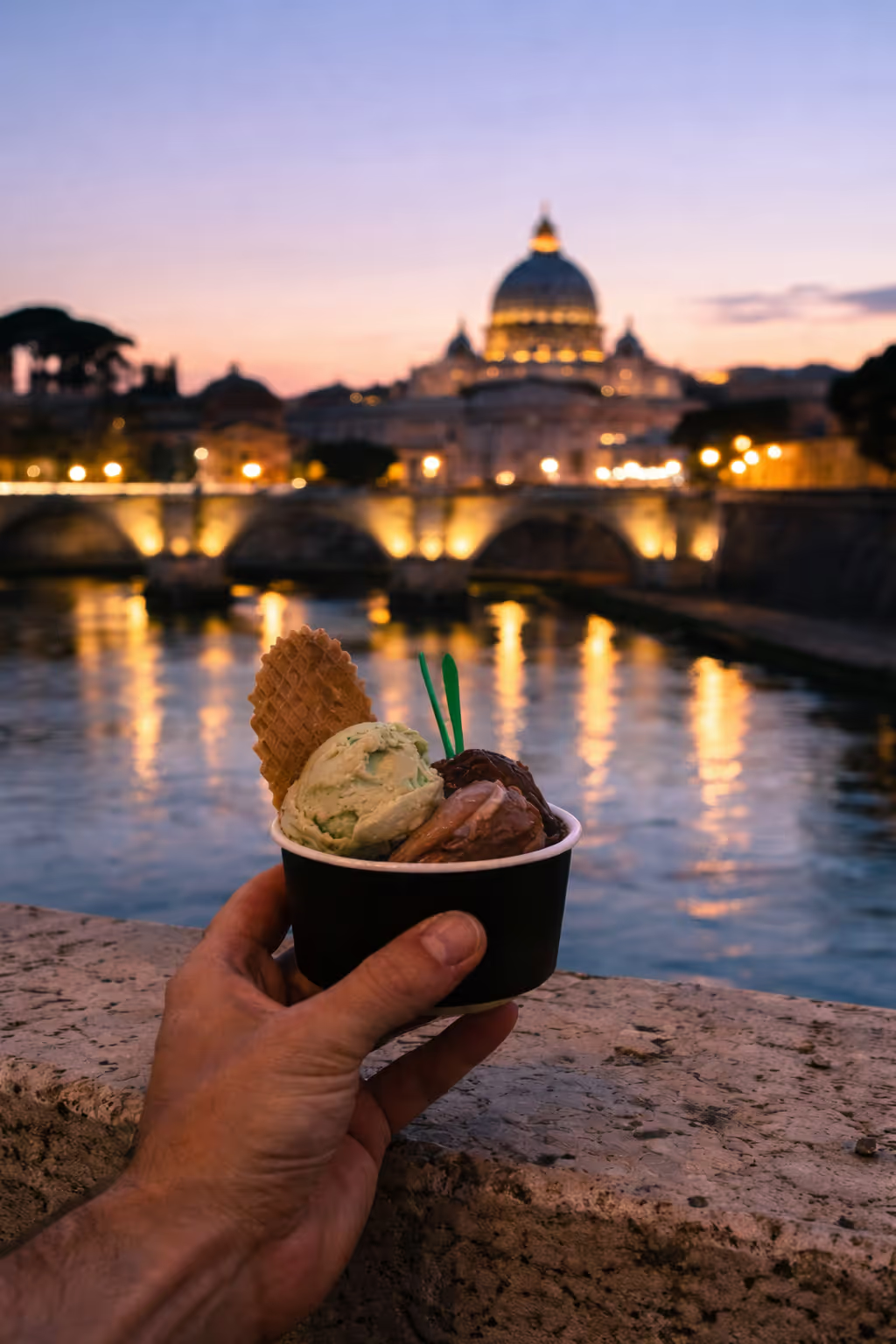
Near the water, the soundscape shifted. Fewer engines. More footsteps. More conversation at a volume that felt like it belonged to the evening. The river reflected the lights in long, slightly broken lines, as if the city was writing in cursive.
I bought gelato and immediately understood why people do it even when it is not necessary. The texture was dense and clean, cold without being aggressive. I ate it while leaning on a railing, watching a group of teenagers argue about something that seemed, to them, extremely important. Their laughter was fast, then gone.
The Quiet Win, and the Key That Felt Like a Story
Back at my place, I climbed the stairs with that particular end-of-day tiredness that feels earned. The key was heavy in my hand, old-fashioned in a way that made me happy. I opened the door without fumbling. A tiny victory.
Inside, the room smelled faintly of detergent and stone cooling down after a warm day. I set my things down carefully, more neatly than I needed to, because travel makes me a little more intentional about the objects I touch.
I wrote a few notes. Not a travel log, not a performance. Just fragments: the espresso coins, the rain reflection, the way the ruins held their breath, the server’s smile. I knew I would forget half of it if I did not pin it to paper.
Then I did the simplest thing I could think of. I opened the window and listened. Somewhere below, someone locked a scooter. Someone else called out a name. A dog barked once, decisively, then stopped. The city was still working, quietly, without needing my attention.
What Stayed With Me
Rome did not feel like a checklist city. It felt like a calibration city.
It trained me to stop trying to extract value from every hour. Instead, it offered value through repetition, through small ceremonies done well. Coffee at the counter. Walking without defending a plan. Sitting where the stones are older than your urgency. Eating lunch slowly enough to notice the edges of taste.
I left with fewer “highlights” than I expected, and more scenes that felt oddly personal. A nod from a stranger. Rain turning stone into a mirror. A key with weight. A river writing light in broken lines.
Rome, for me, was not about seeing everything. It was about learning what happens when you let a place set the pace.

48 Hours in Lisbon: Fado, Pastéis, and the Ghosts of Alfama
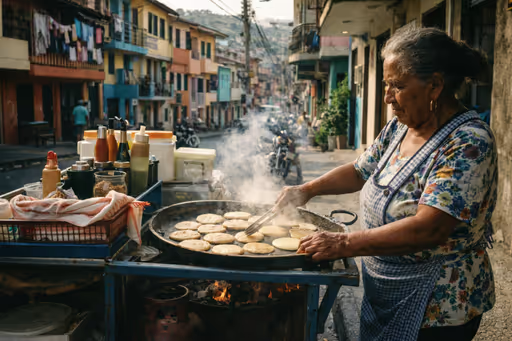
Lost and Found in Medellín: How a Wrong Turn Led to the Best Arepas of My Life
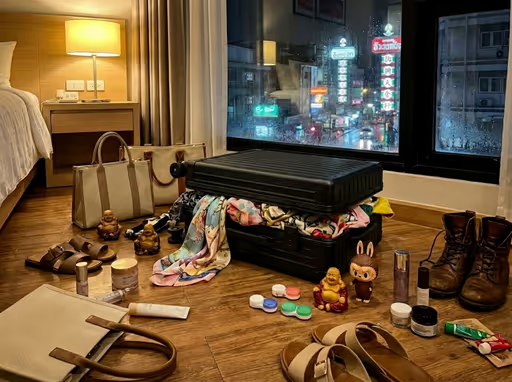
Shopping in Bangkok: How I Ended Up Spending Double My Travel Budget